
Account-Based Marketing, commonly shortened to ABM, has become one of the most discussed methodologies in modern B2B marketing. Instead of casting a wide net to attract as many leads as possible, ABM treats a carefully chosen set of high-value accounts as distinct markets in their own right. The result is a tighter, more coordinated effort between marketing and sales, with messages, content, and offers shaped around the specific needs of each target organization.
The term Account-Based Marketing was coined by ITSMA in 2004, and the approach has since been formalized in research and frameworks published by analyst firms such as Gartner and Forrester. Today it is a recognized methodology supported by dedicated platforms and a growing body of practitioner literature. This article explains what ABM means, how it differs from traditional demand generation, the main types of ABM, the core components of a working strategy, practical examples, common tools, and the metrics teams use to measure success.
ABM Meaning: A Clear Definition of Account-Based Marketing
At its simplest, Account-Based Marketing is a B2B strategy in which marketing and sales teams jointly identify a defined list of target accounts and then build personalized programs to engage the buying group inside each one. Rather than measuring success by the volume of leads collected, ABM measures success by how deeply chosen accounts are engaged and how reliably those accounts move toward becoming customers.
ITSMA, which originally coined the term, frames ABM as treating individual accounts as markets of one. That phrase captures the central idea: instead of a generic campaign aimed at thousands of unknown prospects, an ABM program designs experiences for a known company, often with messaging tailored to specific roles such as the CFO, the head of IT, or the line-of-business leader who will ultimately approve the purchase.
Why ABM Emerged in B2B
Complex B2B purchases typically involve a buying committee, long evaluation cycles, and significant deal sizes. In that environment, a single qualified lead from one stakeholder is rarely enough to drive a decision. ABM responds to this reality by orchestrating outreach across the whole buying group, so the account as a whole is moved forward together rather than one contact at a time.
How ABM Differs From Traditional Lead Generation
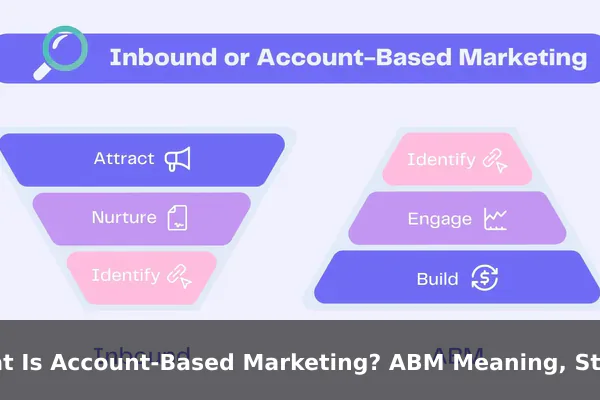
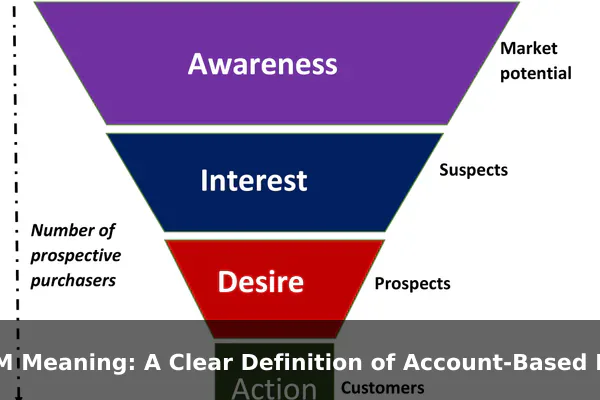
Traditional demand generation is often described as a funnel. Marketing pours visitors in at the top, qualifies a portion of them into Marketing Qualified Leads (MQLs), and hands a smaller subset to sales. Volume at the top of the funnel is a core metric, and the assumption is that more leads generally translate into more pipeline.
ABM is sometimes described as an inverted funnel. The process begins by choosing a relatively small number of accounts that fit the ideal customer profile, then expands outward to identify and engage the relevant decision-makers within those accounts. Coverage and depth replace raw lead volume as the primary measures of progress.
Key Practical Differences
- Targeting: Broad personas and inbound traffic in demand gen versus a named account list in ABM.
- Messaging: Generic value propositions versus account-specific or industry-specific narratives.
- Channels: Mass campaigns versus orchestrated touches across email, advertising, events, and direct sales outreach.
- Metrics: MQL counts and cost per lead versus account engagement, pipeline coverage, and influenced revenue.
- Team model: Marketing and sales as separate functions with handoffs versus marketing and sales operating as a single revenue team.
Many organizations run both motions in parallel. Inbound demand generation continues to feed the broader market, while ABM concentrates extra effort on the accounts that represent the largest revenue opportunities.
The Three Main Types of ABM: One-to-One, One-to-Few, One-to-Many
Industry frameworks, including those published by ITSMA and Forrester, commonly describe ABM in three tiers. Each tier balances personalization depth against the number of accounts that can be served.
One-to-One ABM (Strategic ABM)
One-to-one ABM focuses on a very small group of strategic accounts, sometimes only a handful. Programs are highly customized: dedicated account plans, bespoke research, custom content, and senior-executive engagement. This tier is typically reserved for accounts where the potential lifetime value justifies significant investment.
One-to-Few ABM (ABM Lite)
One-to-few ABM groups a moderate number of accounts that share similar characteristics, such as the same industry, a similar use case, or a comparable stage of growth. Messaging is tailored to the cluster rather than to each individual account, which lets teams scale personalization without sacrificing relevance.
One-to-Many ABM (Programmatic ABM)
One-to-many ABM applies ABM principles to a larger list of accounts, often hundreds or thousands, with the help of intent data, predictive analytics, and targeted advertising platforms. Personalization is lighter at this tier, but the account list still drives targeting decisions, distinguishing it from purely broadcast campaigns.
Most mature ABM programs use a blend of these tiers, applying deeper personalization to the most valuable accounts and lighter, more automated approaches to the wider list.
Core Components of an ABM Strategy
A working ABM strategy is more than a target account list. It is a coordinated program that brings together data, content, channels, and people. The following components recur in nearly every credible ABM framework.
1. Ideal Customer Profile and Target Account List
The starting point is an explicit Ideal Customer Profile (ICP) that describes the kind of organization most likely to become a successful, long-term customer. From the ICP, marketing and sales agree on a finite list of target accounts. Selection criteria often include firmographics such as industry and company size, technographic signals, observed buying intent, and existing relationship strength.
2. Sales and Marketing Alignment
ABM only works when marketing and sales operate from the same playbook. That typically means a shared account list, shared definitions of engagement, common service-level agreements on follow-up, and regular joint reviews of account progress. Many teams formalize this with a written charter that spells out roles and responsibilities for each tier of accounts.
3. Account Research and Buying Group Mapping
For each target account, teams identify the relevant buying group: economic buyers, technical evaluators, end users, and influencers. Account research uncovers strategic priorities, recent announcements, and known initiatives that the offering can support. This research becomes the raw material for personalized messaging.
4. Personalized Content and Offers
Content in ABM is engineered around specific account contexts. That can range from full custom assets for one-to-one accounts to industry-specific variants for one-to-few programs. Useful content types include tailored landing pages, executive briefings, ROI models built around the account’s likely numbers, and case studies featuring peer companies.
5. Multi-Channel Orchestration
ABM rarely relies on a single channel. Programs typically combine targeted advertising, personalized email, LinkedIn outreach, direct mail or gifting, executive events, and direct sales engagement. The orchestration matters as much as the channels themselves: each touch is designed to reinforce the others and move the account forward as a unit.
6. Measurement and Iteration
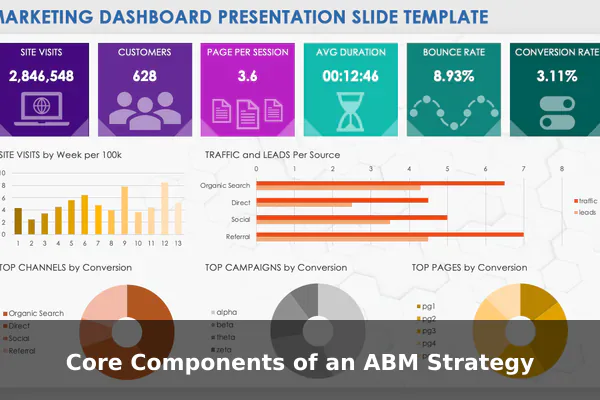
Because ABM does not rely on lead volume, it needs its own measurement model. Teams track account-level metrics, review pipeline contribution from named accounts, and use those insights to refine the target list, messaging, and channel mix over time.
Real-World Examples of Account-Based Marketing in Action
The clearest way to understand ABM is to look at how it can show up in practice. The scenarios below illustrate common patterns rather than describe any specific company’s campaign.
Example 1: Personalized Landing Pages for Strategic Accounts
A B2B software vendor identifies twenty strategic accounts. For each, the team creates a dedicated landing page that uses the account’s name, references its industry challenges, and showcases relevant case studies. When a contact from the account clicks an outbound email or ad, they land on a page that immediately feels like it was built for their organization.
Example 2: Executive Direct Mail and Gifting
For a one-to-one program, marketing partners with sales to send a curated package to a small list of senior executives. The package might include a short printed briefing relevant to the executive’s stated priorities, along with an invitation to a private roundtable. The goal is not a direct conversion but a meaningful first conversation.
Example 3: Account-Specific Case Studies
For one-to-few programs, teams produce case studies that closely mirror the buyer’s situation. A campaign targeting mid-sized manufacturers might feature peer manufacturers, with metrics framed in terms the audience already uses. The case studies are then distributed through targeted advertising, sales outreach, and webinars limited to the target list.
Example 4: LinkedIn Campaigns Aimed at Named Accounts
Many ABM teams use account-targeting features on professional networks to reach defined buying groups. Ads are paired with content tailored to the role and seniority of the recipient, and engagement signals are passed back to sales so follow-up calls and emails reference the topics the buyer has already seen.
Common ABM Tools and Platforms
ABM is supported by several categories of tooling. The boundaries between them are blurring as vendors expand their feature sets, so it is worth focusing on capability categories rather than rigid product labels.
- CRM and marketing automation: Foundational systems that store account and contact data and trigger workflows. Platforms such as HubSpot publish documentation describing how their tools support ABM workflows, including target account management and reporting.
- ABM platforms and intent data: Specialized vendors such as Demandbase publish materials describing how their platforms help identify in-market accounts, run account-based advertising, and measure account engagement.
- Advertising platforms: Channels that allow targeting by company, job title, or industry, used to deliver paid impressions to defined account lists.
- Content and personalization tools: Systems that adapt landing pages, emails, and assets based on account or visitor attributes.
- Analytics and attribution: Tools that measure account-level engagement and pipeline contribution rather than only lead-level metrics.
Capabilities, pricing, and integrations change frequently, so before selecting a tool it is wise to consult current official documentation and analyst coverage from sources such as Gartner or Forrester.
Measuring ABM Success: KPIs That Matter
Traditional lead-based metrics undercount the value of an ABM program because they ignore the depth of engagement inside a single account. A more useful measurement model focuses on the account as the unit of analysis.
Account Engagement
Account engagement aggregates the activity of all known contacts within a target account, including content downloads, site visits, email replies, and meeting attendance. Rising engagement is an early indicator that an account is moving from awareness toward active evaluation.
Account Coverage
Coverage measures how many of the relevant buying group members at a target account are known and reachable. Strong coverage of the full committee, not just one champion, is essential for closing complex deals.
Pipeline and Revenue Metrics
- Pipeline coverage: The ratio of qualified pipeline value from target accounts to the revenue goal for those accounts.
- Pipeline velocity: How quickly target accounts move through key stages compared with non-target accounts.
- Average deal size: Whether ABM-targeted deals are larger than comparable non-ABM deals.
- Influenced revenue: Closed revenue from target accounts where ABM programs touched the buying group.
These KPIs work best when reviewed jointly by marketing and sales, with the named account list as the shared lens.
Conclusion
Account-Based Marketing reframes B2B growth around a focused question: who are the specific organizations most worth winning, and how can marketing and sales serve them together as a single revenue team? With a clear ideal customer profile, a deliberate account list, tightly aligned teams, personalized content, multi-channel orchestration, and account-level measurement, ABM gives B2B organizations a structured way to invest deeply in their most valuable opportunities rather than spreading effort thinly across the entire market.
For teams beginning their ABM journey, a sensible path is to start small, often with a one-to-few pilot, document what works, and expand from there. Authoritative references from ITSMA, Gartner, Forrester, and major ABM platforms can help refine the approach as the program matures, while real engagement with target accounts will always be the most reliable teacher of what truly resonates.
Official references
- ITSMA (Information Technology Services Marketing Association) (itsma.com) – ITSMA coined the term Account-Based Marketing in 2004 and is the original primary source for ABM definitions and frameworks.
- Gartner Marketing Glossary – Account-Based Marketing (gartner.com) – Gartner provides authoritative industry definitions and research on ABM as a recognized B2B marketing methodology.
- Forrester Research (forrester.com) – Forrester (which acquired SiriusDecisions) publishes primary research and frameworks on ABM strategy and B2B marketing methodology.
- HubSpot Account-Based Marketing Documentation (hubspot.com) – Official product documentation from a major ABM platform vendor explaining ABM workflows and implementation.
- Demandbase (demandbase.com) – Official documentation from one of the leading ABM platform providers, offering primary product and methodology references.
