
Every marketer has dreamed of creating a campaign that spreads on its own — one that people share with friends, family, and followers without any paid push behind it. That dream has a name: viral marketing. When a piece of content catches fire online and jumps from person to person at exponential speed, the result can be millions of impressions in days, a surge of new brand awareness, and a lasting place in cultural memory.
Viral marketing is not the same as ordinary word-of-mouth. Traditional word-of-mouth moves slowly, one conversation at a time. Viral marketing spreads through digital networks — social media, messaging apps, and email threads — where a single share can instantly reach hundreds of people, and each of those people can pass it on again. The speed and scale are what set it apart. This article explains what viral marketing is, how the mechanics work, what makes a campaign go viral, and how to build a strategy around it. You will also find real-world examples, common mistakes to avoid, and the metrics that tell you whether a campaign truly delivered.
What Viral Marketing Means
Viral marketing is a strategy that creates content or experiences designed to be shared rapidly and organically by the audience itself, spreading the brand’s message without relying primarily on paid media. The term borrows from the biology of viruses: just as a virus replicates by passing from host to host, viral content replicates by passing from user to user across digital networks.
At its core, viral marketing works on a simple idea: people share things that make them feel something. Whether that feeling is laughter, surprise, inspiration, nostalgia, or even mild outrage, the emotional response drives the share. Each share carries the brand message deeper into audiences the original campaign may never have reached directly.
Key Characteristics of Viral Marketing
- Audience-driven distribution: Real people, not paid placements, do most of the spreading
- Rapid spread: Content reaches large audiences in a short time frame
- Low marginal cost: Each additional share costs the brand nothing extra
- Organic amplification: Content gains momentum through social proof and curiosity
How Viral Marketing Works
The Mechanics of Virality
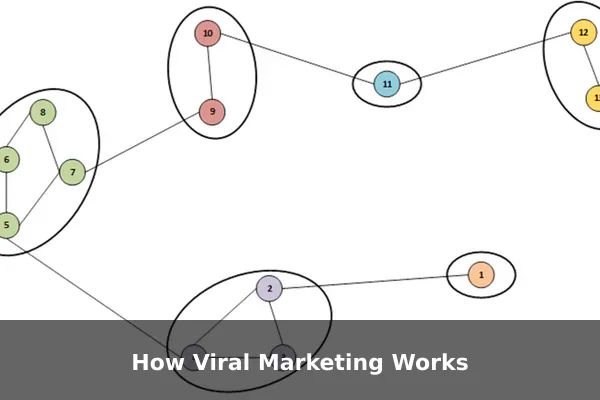
Viral spread follows a chain reaction. One person encounters a piece of content, feels compelled to share it, and their network sees it. A percentage of that network shares it further, and the cycle continues. If each person who sees the content causes more than one other person to share it, the content grows exponentially — this is described as a viral coefficient above 1. Once that threshold is crossed, reach becomes self-sustaining for a period of time.
Core Ingredients That Drive Sharing
- Emotional resonance: Content triggering strong emotions — joy, awe, humor, or nostalgia — is far more likely to be shared than neutral information
- Simple, clear message: People share what they understand instantly; complex or confusing content rarely goes viral
- Easy sharing mechanics: The platform must make it effortless to repost, tag others, or forward
- Social currency: Sharing content that feels clever, exclusive, or trend-forward makes people look good to their peers
- Timing: Content that taps into a current event, season, or cultural moment benefits from built-in attention
Why Brands Use Viral Marketing
Reach and Awareness at Scale
The primary appeal of viral marketing is reach. A campaign that goes viral can generate brand impressions that would cost millions in paid media — often at a fraction of the budget. Small brands have launched themselves into national or global awareness through a single viral post. For challenger brands competing against larger players with bigger ad budgets, viral potential can be a true equalizer.
Stronger Brand Recall
People remember content they chose to engage with far better than ads they were served. When someone shares content voluntarily, they process it more deeply and are more likely to remember the brand behind it. This makes viral marketing one of the highest-recall formats available to marketers.
Community and Long-Term Engagement
Viral campaigns often create moments of shared cultural experience. When millions of people participate in the same challenge or reference the same video, it builds a community feeling around the brand. That engagement can translate into long-term loyalty that paid impressions alone cannot achieve.
- Exponential audience growth without a proportional budget increase
- Earned media coverage from press and independent creators
- Social proof through visible share, like, and comment counts
- Access to new audience segments not previously targeted
Elements of a Strong Viral Marketing Strategy
Not every campaign can go viral, and brands that try to manufacture virality without a clear strategy often fail loudly. But there are consistent building blocks that make a campaign significantly more likely to spread.
Know Your Audience Deeply
Viral content does not appeal to everyone — it appeals deeply to a specific group. Understanding your audience’s values, humor, pain points, and cultural references is the foundation. Content that resonates powerfully within a niche community will spread there first and potentially expand far beyond it through secondary sharing.
Lead with a Strong Hook
The first two seconds determine whether someone keeps watching or scrolls past. A strong hook might be an unexpected image, a bold statement, a surprising question, or an instantly recognizable situation. Without a hook, the rest of the content never gets seen regardless of its quality.
Choose the Right Format for the Platform
- Short-form video (TikTok, Instagram Reels, YouTube Shorts): rewards quick, punchy storytelling with a visual payoff
- Twitter/X: rewards clever, concise text with a sharp punchline or a genuinely surprising take
- LinkedIn: rewards professional insights framed as a personal story with a clear lesson
- Email: rewards value-dense content with a compelling reason to forward to a colleague or friend
Keep the Brand Connection Clear but Light
The brand must be recognizable in the content, but heavy product promotion kills shareability. The best viral content feels like entertainment or genuine value first, with brand presence woven in naturally. Forcing the brand into every moment disrupts the experience and signals to the audience that it is an ad rather than content worth sharing.
Include a Participatory Element
Content that invites the audience to join in — through a challenge, a hashtag, a quiz, or a user-generated content prompt — extends the campaign far beyond what the brand produces itself. It turns passive viewers into active creators who bring their own networks along.
Steps to Build a Viral Marketing Campaign
Step 1 — Set a Clear Objective
Define what success looks like before anything else. Is the goal brand awareness, email signups, app downloads, or website traffic? A clear objective shapes every creative decision that follows and makes post-campaign measurement meaningful.
Step 2 — Develop the Core Concept
Brainstorm ideas centered on the emotional hook. What is the one feeling you want to trigger? What format serves that feeling best on the primary platform? Test concepts internally and with a small outside audience before committing to production.
Step 3 — Produce Authentic Content
Production quality matters, but authenticity matters more. Overly polished content can feel corporate and cold. Many successful viral campaigns win because they feel real and relatable, not because they had a large budget. Match the visual style to what your audience already trusts and shares.
Step 4 — Seed the Content Strategically
Launch is not enough on its own. Seed the content through relevant influencers, niche communities, and early adopters who are likely to share. The first wave of shares creates the social proof that attracts the second wave of organic attention.
Step 5 — Monitor and Optimize in Real Time
Watch how the content performs in the first 24 to 48 hours. Amplify momentum with small paid boosts or cross-platform reposts. Respond to comments, celebrate user-generated remixes, and keep the energy alive while the window is open.
Examples of Viral Marketing
The ALS Ice Bucket Challenge (2014)
The ALS Association’s Ice Bucket Challenge became one of the most successful viral campaigns in history. Participants filmed themselves dumping ice water on their heads, challenged others to do the same or donate to ALS research, and shared the video across social platforms. The campaign raised over $115 million in eight weeks and introduced the ALS cause to millions who had never heard of it. Its success came from a perfect combination of social challenge, visual spectacle, and a clear call to action tied to a genuine cause.
Dollar Shave Club Launch Video (2012)
Dollar Shave Club launched with a low-budget, humorous video in which the founder walked through a warehouse explaining his product in a dry, irreverent tone. The video went viral because it was genuinely funny, spoke directly to a relatable frustration — overpriced razors — and felt nothing like a traditional advertisement. It generated 12,000 orders in the first 48 hours of going live.
Spotify Wrapped
Spotify Wrapped gives users a personalized year-end summary of their listening habits. Users share their results on social media each December, turning individual listening data into a branded shareable image. The campaign goes viral annually not because Spotify forces it, but because sharing your music taste is a deeply personal, identity-driven act that feels like self-expression rather than advertising.
What each example shares:
- A strong emotional angle — empathy, humor, or personal identity
- Effortless sharing mechanics built into the concept itself
- Clear brand presence without aggressive product selling
- A participatory element that extended reach beyond original viewers
Risks and Common Mistakes in Viral Marketing
Forcing It
The biggest mistake brands make is trying to engineer virality by copying the surface features of past viral campaigns without understanding why they worked. A forced trend or an awkward attempt at humor often goes viral for the wrong reasons — generating ridicule rather than affection.
Weak Brand Connection
Some campaigns go viral but fail to benefit the brand because nobody can remember who created them. If the content is entertaining but the brand is invisible, the shares do not convert to awareness. Every viral piece needs a clear and memorable brand signature.
Controversy Backfire
Edgy or provocative content can generate shares, but controversy can escalate quickly and damage brand reputation in ways that take years to repair. Any campaign relying on shock value needs thorough risk assessment before it is published.
Common Mistakes to Avoid
- Copying another brand’s viral format without adapting it to your own audience and voice
- Prioritizing shock or controversy over genuine audience value
- Launching without a seeding strategy and expecting organic spread alone
- Ignoring the comment section during the live campaign window
- Measuring only views and neglecting downstream business impact
How to Measure Viral Marketing Success
Reach, Impressions, and Share Rate
Total reach shows how many unique people saw the content. Impressions include repeated views. Share rate — calculated as shares divided by total views — indicates how compelling the content is. A viral coefficient above 1 confirms exponential spread and is the mathematical definition of true virality.
Engagement Rate
Likes, comments, saves, and reactions reveal emotional resonance. High engagement alongside high reach confirms that the content did not just reach audiences — it connected with them and prompted a response.
Referral Traffic and Business Conversions
Track how much traffic the campaign drives to your website and how many of those visitors complete a desired action such as a signup, download, or purchase. This step connects viral exposure to actual business results and makes the campaign defensible from a return-on-investment standpoint.
- Total reach and unique impressions across platforms
- Share rate per channel
- Engagement rate (reactions, comments, saves, reposts)
- Earned media mentions and press coverage volume
- Referral traffic from social platforms to your website
- Conversion rate of campaign-driven visitors
- New followers, subscribers, or leads acquired during the campaign window
When Viral Marketing Makes Sense
Viral marketing is not the right tool for every situation. It works best when the brand needs a fast awareness boost such as a product launch, when the target audience is highly active on social platforms, when the concept has a genuine participatory element, and when the team has the flexibility to produce authentic content and monitor it in real time.
It may not be the right approach when the product requires a long educational sales cycle with complex messaging, when the audience is highly specialized or not socially active online, or when the brand needs consistent and predictable results rather than high-variance spikes in attention.
For most brands, viral marketing works best as a campaign-level effort layered on top of a steady content and paid media strategy — not as a replacement for it. It is a high-risk, high-reward format that rewards creativity, audience understanding, and impeccable timing.
Understanding what viral marketing is, and how to build campaigns deliberately rather than hoping for luck, is what separates brands that achieve lasting awareness from those that simply produce content and wait. Study the mechanics, apply the strategy, measure results honestly, and keep refining your approach until your content begins to travel farther than you send it.
