
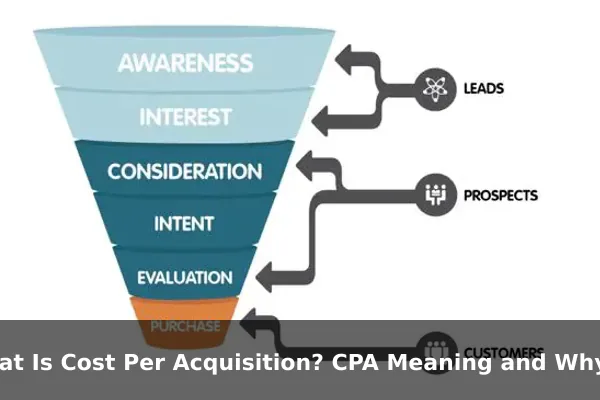
In marketing, traffic alone does not pay the bills. A campaign can generate thousands of impressions and a steady stream of clicks, yet still fail if the cost of getting a real result is too high. That is why experienced marketers look past surface metrics and focus on what it costs to produce an actual business outcome. One of the clearest ways to do that is by tracking cost per acquisition, usually shortened to CPA.
CPA is a practical performance metric because it connects spend to action. Instead of asking only how much you spent on ads, it asks what that spending produced: a sale, a qualified lead, a demo booking, a trial signup, an app install, or another defined conversion. That makes CPA useful for business owners, in-house marketing teams, agencies, and advertisers who need to decide whether a campaign is efficient enough to keep funding.
This guide explains what cost per acquisition means, how to calculate it correctly, why it matters in everyday marketing decisions, and how to improve it without sacrificing quality. It also shows where people confuse CPA with related metrics such as CAC, CPC, and CPL, which is important because the wrong comparison often leads to the wrong budget decisions.
Cost Per Acquisition Defined
Cost per acquisition is the average amount of money you spend to generate one desired action. The action is the acquisition. In some cases that acquisition is a purchase. In others, it may be a lead form submission, a booked consultation, a free trial signup, a newsletter subscription, or a mobile app install. The exact meaning depends on the goal of the campaign.
The key idea is simple: CPA tells you how expensive each completed result is. It is not just a measure of ad spend in isolation. It is a measure of ad spend relative to conversions. That makes it more useful than raw spend when you want to judge performance.
What counts as an acquisition?
An acquisition should be a clearly defined action with business value. For an ecommerce brand, an acquisition often means a completed order. For a local service business, it may mean a booked appointment. For a B2B software company, it may be a demo request or a free trial started by a decision-maker. For a publisher, it could be a paid subscription.
What matters most is consistency. If one report counts every form fill as an acquisition while another counts only qualified leads, the resulting CPA numbers will not be comparable. Businesses often track more than one CPA at the same time. For example, a SaaS company might track:
- Trial signup CPA to measure front-end campaign efficiency
- Demo booking CPA to measure higher-intent interest
- Paid customer CPA to understand the true cost of converting demand into revenue
That layered approach is often more useful than forcing a single definition across every campaign.
Where marketers use CPA
CPA is common in paid search, paid social, display advertising, retargeting, affiliate campaigns, marketplace ads, and app promotion. It can also be used in broader channel analysis when a team wants to compare how efficiently different acquisition sources produce results. Because it can be calculated at the campaign, ad set, keyword, audience, or landing page level, CPA is a flexible decision-making metric rather than just a headline number in a dashboard.
How To Calculate CPA
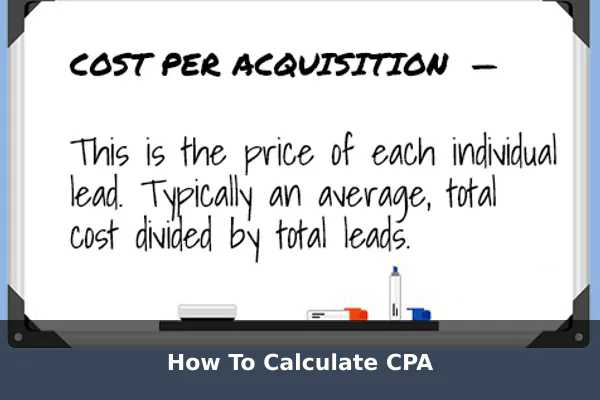
The basic formula is straightforward:
CPA = Total acquisition cost / Number of acquisitions
If you spent $2,000 on a campaign and it generated 50 acquisitions, your CPA is $40. That means you paid an average of $40 for each acquisition produced during the measured period.
Which costs should you include?
The most common version of CPA uses media spend only, especially inside ad platforms. That is useful for day-to-day optimization, but it is not always enough for business decisions. Depending on what you are analyzing, you may also want to include additional costs tied directly to acquiring the conversion.
- Ad spend: search ads, social ads, display ads, sponsored placements, and other media costs
- Creative production: design, copy, video editing, or outsourced asset creation when those costs are material
- Agency or freelancer fees: relevant if you want a more complete picture of channel efficiency
- Landing page or tool costs: worth including when a specific tool or funnel is dedicated to the campaign
- Affiliate commissions or partner payouts: essential when performance partners are part of the acquisition model
The important rule is not to be randomly selective. If you compare one campaign using ad spend only and another using ad spend plus management fees, the comparison becomes misleading. Use a consistent cost definition when you compare CPAs across channels or time periods.
A simple CPA example
Imagine a home services company runs a search campaign for air conditioning repair. In one month, it spends $3,600 on ads and receives 120 phone calls that meet its lead quality criteria. The CPA is:
$3,600 / 120 = $30 CPA
That means the business is paying $30 for each qualified lead. Whether that is good or bad depends on what those leads are worth. If 25 percent of those leads become customers and the average profit per customer is high, a $30 CPA may be excellent. If the close rate is weak or profit margins are thin, the same CPA may be too expensive.
Why the tracking window matters
CPA is only as accurate as the tracking behind it. If one platform reports conversions on a 7-day click window and another uses a 30-day click window, the counts may look different even when the campaigns are similar. The same issue appears when offline sales or phone call outcomes are not imported back into the reporting system. A CPA number should always be interpreted with its measurement rules in mind.
That is why disciplined teams document three things before comparing campaigns: the cost inputs, the acquisition definition, and the attribution window. Without those three pieces, CPA can look precise while hiding basic measurement inconsistencies.
Why CPA Matters In Marketing
CPA matters because it turns marketing performance into something operational. It helps teams decide where to spend more, where to cut back, and whether growth is sustainable. A campaign with attractive traffic numbers but a weak CPA may be far less valuable than a smaller campaign that quietly produces efficient conversions.
It measures efficiency, not just activity
Clicks, sessions, impressions, and reach show activity. CPA shows efficiency. A campaign may attract attention, but if the audience does not convert, the cost of getting a real outcome rises. CPA forces marketers to look at the full path from exposure to action. That makes it a better performance filter than top-of-funnel metrics alone.
It helps control budget allocation
Most teams do not have unlimited budget. CPA helps them prioritize. If one campaign is producing high-quality demo requests at $45 each while another is generating weaker leads at $90 each, the budget decision becomes clearer. You may still fund both, but you would not treat them as equally efficient.
This is especially useful when comparing:
- Different channels such as search, social, and affiliate
- Different audiences within the same platform
- Different landing pages for the same offer
- Different offers, price points, or messages
CPA makes those comparisons more actionable because it turns a campaign into an economic unit.
It connects marketing to profitability
A low CPA is not automatically good, but a high CPA is often a warning sign. If a business earns $60 in gross profit from a typical first purchase, a $75 CPA creates an obvious problem. The campaign may still generate revenue, but it does not generate healthy economics. On the other hand, if the business has recurring revenue and strong retention, a higher front-end CPA may still be acceptable. In both cases, CPA matters because it forces the profitability conversation.
Put simply, CPA is one of the fastest ways to ask whether growth is efficient enough to keep scaling.
CPA vs. CAC vs. CPC vs. CPL
Many people mix up CPA with other marketing metrics. The confusion matters because each metric answers a different question. A team that uses the wrong one as its main KPI can optimize for the wrong outcome.
CPA vs. CAC
CPA usually measures the cost of getting a defined conversion at the campaign or channel level. CAC, or customer acquisition cost, usually measures the full cost of acquiring a new customer across the business. CAC often includes broader sales and marketing expenses, while CPA may focus on a specific action inside a specific campaign.
That means a company can have a low trial signup CPA and still have a high CAC if many trial users never become paying customers or if sales follow-up costs are heavy. This difference is one reason CPA is so useful operationally: it helps optimize individual acquisition steps before finance rolls everything up into customer economics.
CPA vs. CPC
CPC, or cost per click, tells you how much each click costs. That is a useful media buying metric, but it does not tell you whether those clicks become meaningful results. A low CPC can still produce a poor CPA if the traffic is weak, the landing page is confusing, or the offer does not convert.
Think of it this way: CPC measures the cost of attention, while CPA measures the cost of action.
CPA vs. CPL
CPL, or cost per lead, is a specific type of CPA. When your chosen acquisition is a lead, CPA and CPL can effectively describe the same number. But not every acquisition is a lead. If your campaign objective is a purchase, subscription, or app install, CPA is the broader term.
That is why marketers often use CPA when speaking generally and CPL when the conversion event is specifically lead generation.
Why the distinction matters
Each metric fits a different layer of decision-making. CPC helps with media pricing. CPL helps evaluate lead generation. CPA helps compare outcome efficiency across campaigns. CAC helps measure the broader cost of turning demand into customers. The smart move is not choosing one forever. It is choosing the one that best matches the business question in front of you.
What Counts As A Good CPA?
There is no universal good CPA. A good CPA is one that fits your unit economics, conversion quality, and growth goals. That is why generic benchmark lists often create more confusion than clarity. A $20 CPA might be excellent for one company and terrible for another.
Profit margin changes the answer
If you sell a low-margin physical product, you usually need a lower CPA than a company selling a high-margin software subscription or premium service. The more room you have after costs, the more acquisition spend you can afford. That is the first filter.
Lifetime value changes the answer
If customers buy once and disappear, the allowable CPA must stay tight. If customers stay for months or years, spend more over time, and renew at healthy rates, the business can tolerate a higher CPA. This is why subscription businesses sometimes accept an acquisition cost that looks high on day one but works well over a longer payback period.
The acquisition type changes the answer
A lead is not a customer, and not all leads are equal. If you are calculating CPA for lead generation, you should work backward from downstream performance. A useful way to think about it is:
- Estimate what a new customer is worth.
- Estimate how many acquisitions turn into customers.
- Set a maximum cost you can afford per acquisition while still protecting margin.
For example, if a business can afford to spend $400 to acquire a paying customer and one in ten qualified leads becomes a customer, a rough target lead CPA would be around $40. This simple logic is often more helpful than chasing a benchmark from another industry.
Channel intent also matters
Search traffic with strong buying intent may justify a higher CPA than colder social traffic because it often closes faster and at better quality. Retargeting often produces a lower CPA because the audience already knows the brand, but that does not mean it can scale indefinitely. A good CPA is always contextual. It depends on what the acquisition is, where it came from, and what happens after the conversion.
Common Reasons CPA Gets Too High
When CPA rises, the problem is usually not one thing. It is often a chain of weak decisions across targeting, messaging, landing page experience, offer design, and measurement. Breaking the issue into stages helps teams diagnose the real cause instead of making random changes.
Pre-click problems
Some CPA problems begin before the visitor ever reaches the site. Common examples include broad targeting, weak keyword intent, poor audience exclusions, tired ad creative, vague copy, and message mismatch between the ad and the offer. If the wrong people click, the cost of getting each real acquisition increases quickly.
Pre-click inefficiency often shows up as a combination of reasonable traffic volume and disappointing conversion rate. In that situation, the issue may not be the landing page first. It may be that the campaign is inviting low-intent visitors.
Post-click problems
Other CPA problems happen after the click. A slow landing page, cluttered layout, weak call to action, too many form fields, confusing checkout flow, missing trust signals, or mobile usability issues can all hurt conversion rate. Even a strong audience can become expensive if friction is high once they arrive.
This is why CPA should not be treated as an ad platform metric only. It is also a landing page and funnel metric. The ad may be doing its job while the page is failing to finish the job.
Measurement problems
Sometimes the campaign is not getting worse at all. The reporting is. Broken tags, duplicate conversion events, missing offline attribution, poor CRM integration, and inconsistent definitions can distort CPA in either direction. A falsely low CPA can lead to overspending. A falsely high CPA can lead to cutting campaigns that are actually working.
Before making major budget changes, it is worth confirming that the measurement setup still reflects reality.
How To Lower Your CPA
Lowering CPA is not about making one dramatic tweak. It is usually about improving efficiency across the acquisition path. The best results come from fixing both traffic quality and conversion quality, then scaling only what continues to hold up under more spend.
Improve audience quality
Start by tightening who sees the offer. Refine keyword targeting, add negative keywords, exclude weak audiences, segment retargeting lists, and separate high-intent traffic from exploratory traffic. On paid social, build audiences from better source data, not just larger pools. Better inputs usually reduce wasted clicks and produce a healthier CPA before any landing page changes are made.
Increase conversion rate after the click
Once the right audience is arriving, make the action easier to complete. Match the landing page headline to the ad promise. Remove unnecessary distractions. Shorten forms where possible. Improve page speed. Clarify the benefit. Add trust signals such as reviews, guarantees, or proof of results. Many CPA improvements come from fixing simple friction points that were silently blocking conversion.
Strengthen the offer itself
Some campaigns struggle because the offer is too weak, not because the targeting is bad. A stronger trial, a more compelling discount, a clearer pricing structure, a better consultation promise, or a more relevant lead magnet can increase conversion rate enough to improve CPA materially. Messaging and economics often move together.
Use disciplined testing and budget moves
One mistake marketers make is changing too many things at once. A better process is to test in controlled steps. Review CPA by segment, identify the biggest leak, run focused experiments, and scale only after the improvement proves durable.
- Confirm conversion tracking is accurate before optimizing anything.
- Break CPA down by campaign, audience, keyword, ad, device, and landing page.
- Pause or limit the worst-performing segments after you have enough data.
- Test one pre-click variable and one post-click variable at a time.
- Check lead quality or sales quality before declaring a lower CPA a win.
- Shift budget gradually toward the combinations that keep quality and efficiency together.
The goal is not just a cheaper acquisition. The goal is a cheaper useful acquisition.
Mistakes To Avoid When Using CPA
CPA is powerful, but it is easy to misuse. Some of the most common mistakes come from treating it as a complete answer when it is really one important part of a larger performance picture.
- Chasing the lowest number without checking quality: Cheap leads or low-value buyers can make CPA look strong while revenue quality deteriorates.
- Ignoring hidden costs: Media-only CPA may be fine for daily optimization, but business decisions often require a fuller cost view.
- Evaluating campaigns too early: Small sample sizes and delayed conversions can make early CPA readings unstable.
- Blending unlike traffic sources together: A single blended CPA can hide which channel is efficient and which is draining budget.
- Using a weak conversion event: Optimizing for newsletter signups when the real goal is qualified sales calls may lower CPA while hurting the actual business outcome.
- Assuming every acquisition has equal value: One acquisition from a high-intent source may be worth several from a low-intent source.
Used well, CPA sharpens decision-making. Used carelessly, it can turn into a vanity metric with better branding.
Quick CPA Example Table
The table below shows why CPA should be interpreted in context rather than ranked mechanically.
| Channel | Spend | Acquisitions | CPA | Typical Interpretation |
|---|---|---|---|---|
| Paid Search | $4,000 | 80 | $50 | Higher intent, often stronger close rates |
| Paid Social | $3,000 | 120 | $25 | Lower CPA, but lead quality may vary more |
| Retargeting | $1,200 | 40 | $30 | Efficient warm traffic, but limited scale |
| Affiliate | $2,500 | 35 | $71.43 | More expensive, but sometimes higher average order value |
How to read this table
At first glance, paid social looks best because it has the lowest CPA. But if those leads close at half the rate of paid search, search may still deliver better economics. Retargeting may look efficient, but its audience size can cap growth. Affiliate may show the highest CPA, yet still be valuable if it brings in larger orders or better retention.
This is the practical lesson: CPA is a strong comparison metric, but the best channel is not always the one with the cheapest acquisition on paper. The best channel is the one that combines efficient acquisition with profitable downstream behavior.
When To Use CPA As Your Main Metric
CPA works best when the business has a clear desired action and needs to understand how efficiently campaigns are producing it. That makes it especially useful in direct response marketing, lead generation, ecommerce promotions, local service advertising, app installs, and demand generation programs with well-defined conversion points.
Best situations for CPA
- When your campaign has one primary action you want users to complete
- When you need to compare channel efficiency under a fixed budget
- When you are testing offers, audiences, or landing pages
- When acquisition volume and acquisition cost are both important
- When you need a fast, operational KPI for campaign optimization
When CPA should not stand alone
CPA becomes less complete when the sales cycle is long, the conversion event is early-stage, or customer value varies widely after acquisition. In those cases, pair CPA with the metrics that reveal quality and profitability. Helpful companion metrics include conversion rate to customer, revenue per acquisition, customer lifetime value, payback period, retention, and churn.
For example, a B2B campaign may achieve a very attractive demo booking CPA, but if those demos do not turn into pipeline, the number is not enough on its own. Likewise, a subscription brand may accept a higher CPA if renewal rates are strong and the payback period remains healthy.
A useful rule is this: use CPA as the main metric for campaign efficiency, but not as the only metric for business performance.
Conclusion
Cost per acquisition is one of the most useful metrics in performance marketing because it answers a direct question: how much does it cost to get the result you actually want? When the acquisition is clearly defined and tracking is consistent, CPA helps you compare channels, control budget, improve funnels, and decide whether growth is economically sustainable.
The strongest use of CPA is not chasing the lowest possible number. It is using the metric to find efficient, repeatable acquisition that still produces quality outcomes and healthy margins. If you treat CPA as a decision tool rather than a vanity score, it becomes far more valuable than a simple reporting figure.
