
On average, only about 2–3% of website visitors convert on their first visit. The rest leave — sometimes because they were browsing, sometimes because they got distracted, and sometimes because they simply weren’t ready to commit. That’s a massive pool of potential customers walking out the door before you’ve had a real chance to win them over.
Retargeting is the strategy designed to solve exactly this problem. In its simplest form, retargeting means showing ads to people who have already interacted with your brand — visited your website, watched your video, or clicked a link — but didn’t take the action you wanted. Instead of starting from scratch with cold audiences, retargeting lets you re-engage warm prospects who already know who you are.
In this guide, you’ll learn what retargeting is, how it works under the hood, the different types available, its core benefits, and real-world examples that show it in action. Whether you’re new to digital advertising or looking to sharpen your existing campaigns, this article gives you a complete, practical foundation.
What Is Retargeting?
Retargeting (also called remarketing, particularly in Google’s ecosystem) is a form of online advertising that targets users who have previously interacted with your website, app, or content. Unlike traditional display advertising that casts a wide net at strangers, retargeting focuses its budget on a much more qualified audience — people who have already shown interest in what you offer.
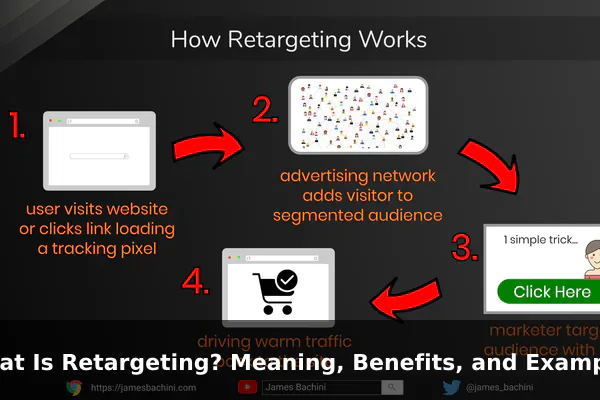
The core mechanism relies on small pieces of code — commonly called pixels or tracking tags — placed on your website. When a visitor lands on your site, the pixel fires and sets a browser cookie on that user’s device. That cookie acts as a digital flag, signaling to advertising platforms that this user is part of your retargeting audience. The next time they browse the web, check social media, or search on Google, your ads can appear in front of them.
Retargeting is distinct from general display advertising in one critical way: the audience is self-selected. These are users who have already taken some action — visiting a product page, reading a blog post, or adding something to a cart — which makes them significantly more likely to respond to a follow-up ad than a cold audience would be.
How Retargeting Works
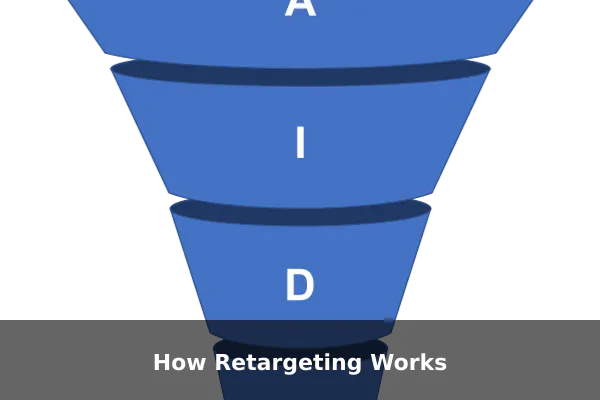
Understanding the mechanics of retargeting helps you use it more intentionally. Here’s a step-by-step breakdown of how a typical retargeting campaign operates:
- Visitor arrives on your site. A user finds your website through search, social media, a referral, or direct traffic.
- The tracking pixel fires. A small snippet of JavaScript embedded in your website activates and communicates with the ad platform — Google, Meta, LinkedIn, or others.
- A cookie is placed on the visitor’s browser. This cookie identifies the user anonymously and adds them to your retargeting audience list on the ad platform.
- The user leaves without converting. They move on to news sites, social media feeds, YouTube, or other apps.
- Your ad appears on other platforms. Because the ad platform recognizes the cookie, it serves your retargeting ad to that user wherever they go within the platform’s network.
- The user clicks the ad and returns. With a compelling offer or reminder, the user clicks through and completes the desired action — a purchase, sign-up, or inquiry.
The major platforms that support retargeting include the Google Display Network, Meta (Facebook and Instagram), LinkedIn, TikTok, and various programmatic advertising networks. Each platform has its own pixel, but the underlying principle is the same across all of them.
Pixel-Based vs. List-Based Retargeting
There are two primary technical approaches to retargeting:
- Pixel-based retargeting: Uses browser cookies placed by a tracking pixel. This is the most common method and allows real-time audience building based on site behavior.
- List-based retargeting: Involves uploading a customer email list directly to an ad platform, such as Facebook Custom Audiences or Google Customer Match. The platform matches emails to user accounts and serves ads to those specific individuals.
Pixel-based is better for capturing anonymous website visitors at scale. List-based is more precise and works best when you already have existing customer or lead data to work with.
Types of Retargeting
Not all retargeting campaigns look the same. Depending on your goals and the behavior you’re targeting, there are several distinct types to consider:
Site Retargeting
The most common type. This targets users who visited specific pages on your website — a product page, pricing page, or checkout — but didn’t convert. Segmenting audiences by the pages they visited enables more relevant ad creative for each group.
Search Retargeting
Targets users who searched for specific keywords related to your product or industry, even if they never visited your website. This helps you reach people in an active research phase who match your ideal customer profile.
Email Retargeting
Uses your email list to serve ads to subscribers on display networks or social platforms. It’s particularly effective for re-engaging contacts who received a campaign email but didn’t click through or take action.
Social Media Retargeting
Platforms like Meta, LinkedIn, and TikTok let you retarget users who engaged with your content — watched a video, liked a post, or clicked a link — within that platform. This is powerful for audiences who interact with your brand socially but haven’t visited your site yet.
Dynamic Retargeting
An advanced form used heavily in e-commerce. Rather than showing a generic ad, dynamic retargeting automatically displays the exact product a user viewed on your site — complete with the product image, name, and price — within the ad itself. Both Google and Meta support dynamic retargeting through product catalog feeds.
Key Benefits of Retargeting
Retargeting has become a standard part of digital marketing strategies because it consistently delivers results. Here are the most significant benefits:
Higher Conversion Rates
Retargeted visitors are 70% more likely to convert than cold audiences, according to widely cited industry research. Because they’ve already shown interest, the barrier to conversion is lower — they just need the right nudge at the right time.
Improved Brand Recall
Repeated exposure to your brand across multiple channels builds familiarity and trust. Even if a retargeted user doesn’t click immediately, seeing your brand multiple times reinforces recognition through what psychologists call the mere-exposure effect. When they’re finally ready to buy, your brand is top of mind.
Cost Efficiency
Because you’re targeting a pre-qualified audience rather than broad cold traffic, your ad spend goes further. Retargeting campaigns typically achieve lower cost-per-acquisition (CPA) and higher return on ad spend (ROAS) compared to prospecting campaigns aimed at new audiences.
Personalized Messaging
Retargeting allows you to tailor ad creative based on specific user behavior. Someone who viewed your pricing page gets a different ad than someone who read a blog post. This behavioral segmentation makes your messaging far more relevant — and relevance drives clicks and conversions.
Shorter Sales Cycles
In B2B and high-consideration purchases, the sales cycle can span days, weeks, or months. Retargeting keeps your brand present throughout the decision-making process, reducing drop-off and helping prospects move through the funnel faster.
Real-World Retargeting Examples
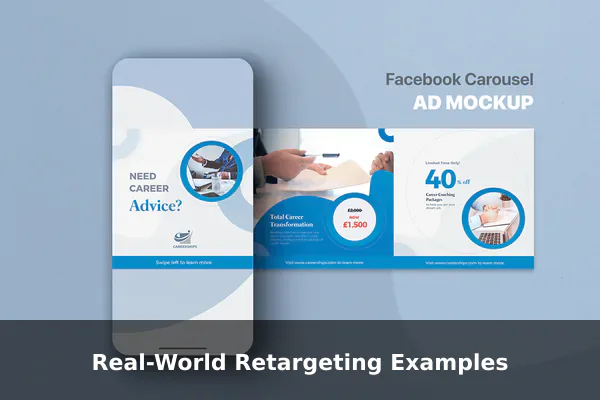
Looking at concrete scenarios makes retargeting much easier to understand. Here are three practical examples across different industries:
E-Commerce Cart Abandonment
A customer visits an online clothing store, adds a jacket to their cart, but leaves without buying. Within 24 hours, they’re scrolling Instagram and see an ad featuring that exact jacket — along with a 10% discount code and a “Complete Your Purchase” call to action. This is dynamic retargeting in action. Cart abandonment campaigns are routinely among the highest-ROI advertising efforts for e-commerce brands.
SaaS Free Trial Reminder
A user visits a project management software’s pricing page, compares plans, and leaves without signing up. Over the next two weeks, they see retargeting ads on Google Display Network and LinkedIn highlighting customer success stories, a limited-time trial offer, and a feature comparison. Each ad shifts slightly based on how many days have passed since the visit — a technique called time-decay segmentation.
Travel Booking Recovery
A traveler searches for flights on a booking site, reviews options, but doesn’t complete the purchase. The next morning, they open a news website and see a banner ad showing the specific route they searched, along with updated pricing and a “Prices May Change” urgency message. The ad links directly back to the search results page, reducing friction in the return journey.
In all three cases, retargeting works because it reaches a high-intent audience with a contextually relevant message at a moment when they’re still in or near the decision phase.
Best Practices to Run Retargeting Effectively
Running retargeting without guardrails can backfire. These best practices help you get results without alienating your audience:
- Set frequency caps. Limit how many times the same user sees your ad per day or week. A cap of 3–5 impressions per day is a reasonable starting point for most campaigns.
- Segment your audiences. Don’t treat all site visitors the same. Create separate campaigns for users who visited the homepage, product pages, and checkout — each with tailored creative and offers.
- Use time-decay windows. A visitor from 30 days ago is far less likely to convert than one from yesterday. Adjust bids or creative intensity based on recency, using custom audience membership durations.
- Exclude converted users. Once a user completes a purchase or signs up, remove them from your retargeting audience immediately. Serving purchase ads to someone who already bought is wasteful and can feel intrusive.
- Test different creatives per funnel stage. Top-of-funnel visitors may respond to educational content, while bottom-of-funnel visitors need a strong offer or social proof. Match your ad message to where they are in the buying journey.
Common Retargeting Mistakes to Avoid
Even experienced marketers make these errors. Knowing them in advance helps you avoid costly missteps:
Ad Fatigue from Over-Exposure
Bombarding users with the same ad repeatedly doesn’t just underperform — it actively damages your brand. Users who feel followed by an ad develop negative associations with your business. Frequency caps and creative rotation are your primary defenses.
Targeting Too Broad an Audience
Not every site visitor is worth retargeting. Someone who bounced from your homepage in three seconds is very different from someone who spent five minutes reading your pricing page. Retargeting everyone equally dilutes your budget on low-intent visitors who are unlikely to return.
Ignoring Privacy Regulations
Retargeting relies on cookies and user tracking, which means it must comply with privacy laws like GDPR in Europe and CCPA in California. Failing to have proper cookie consent mechanisms and opt-out options isn’t just legally risky — it erodes user trust. Always ensure your tracking setup is compliant with applicable regulations in your target markets.
Using Generic Ad Creatives
A static banner that says “Come Back and Shop!” with your logo is forgettable. Effective retargeting uses creative that reflects what the user specifically viewed, addresses common objections around price or trust, and includes a clear, compelling call to action. Generic ads waste the targeting advantage you’ve already earned.
Conclusion
Retargeting is one of the most effective tools in a digital marketer’s arsenal — not because it’s complex, but because it’s logical. It focuses your attention and budget on the people most likely to convert: those who have already raised their hand by visiting your site or engaging with your content.
The key to success lies in doing it thoughtfully. Segment your audiences by behavior and intent, cap your frequency, tailor your creative to each funnel stage, and always respect your audience’s privacy. Done right, retargeting doesn’t feel intrusive — it feels helpful, arriving at exactly the right moment to remind a ready buyer that you’re there. Start with a simple site retargeting campaign on Google or Meta, measure your results, and build from there.
