
Every time someone types a question into Google and clicks a result without ever seeing an ad, that click is organic traffic. It sounds straightforward, but organic traffic is one of the most valuable assets a website can build. Unlike paid campaigns that stop delivering the moment your budget runs out, organic traffic keeps arriving as long as your content earns its place in search results.
For marketers, business owners, and content creators, understanding organic traffic is fundamental to long-term digital strategy. It shapes how you invest your time, prioritize your content, and measure sustainable growth. This guide breaks down exactly what organic traffic is, why it matters more than many other channels, and what it looks like in real-world practice.
What Organic Traffic Means
Organic traffic refers to all visitors who arrive at your website through unpaid search engine results. When a user enters a query on Google, Bing, or another search engine, the engine returns a ranked list of results based on relevance and authority — not on who paid the most for placement. Clicking any of those non-ad results generates organic traffic for the destination website.
The word organic distinguishes this channel from paid search, where advertisers bid for positions at the top of results pages. Organic results earn their ranking through search engine optimization (SEO) — the practice of making content more relevant, technically sound, and authoritative so search engines surface it for the right queries.
How Search Engines Decide What Ranks
Search engines like Google use complex algorithms that evaluate hundreds of signals to determine which pages deserve top organic positions. The core factors include:
- Relevance: Does the page genuinely answer the searcher’s query?
- Authority: Do other credible websites link to this page?
- User experience: Is the page fast, mobile-friendly, and easy to navigate?
- Content quality: Is the information accurate, original, and thorough?
- Search intent match: Does the page format (guide, list, product page) match what the searcher expects?
When your page satisfies these criteria consistently, search engines reward it with higher rankings — and higher rankings translate directly into more organic traffic over time.
Organic Traffic vs. Other Traffic Sources
To fully appreciate organic traffic, it helps to see how it compares to the other main channels that bring visitors to a website. Most analytics platforms categorize traffic into five primary sources:
Paid Search Traffic
Paid search traffic comes from ads that appear at the top or bottom of search results pages, typically labeled Sponsored. Advertisers pay a fee each time someone clicks — known as cost-per-click (CPC). The moment an ad budget is exhausted or the campaign is paused, the traffic stops completely. Organic traffic has no per-click cost and continues independently of any ad spend.
Direct Traffic
Direct traffic occurs when someone types your URL directly into their browser or uses a saved bookmark. This audience already knows your brand and sought you out intentionally. While valuable, direct traffic does not scale the way organic can — it depends on existing brand awareness rather than new discovery.
Referral Traffic
Referral traffic arrives when a visitor clicks a link on another website that is not a search engine. A guest post, a news mention, or a partner directory listing can all generate referral visits. It is useful but unpredictable, tied to specific external relationships rather than ongoing search demand.
Social Media Traffic
Social traffic comes from links shared on platforms like Facebook, Instagram, LinkedIn, or X. It can spike sharply after a post goes live but typically fades within days unless the content continues circulating. Organic search traffic, by contrast, tends to be steadier and self-reinforcing over months and years.
| Traffic Source | Direct Cost | Longevity | Scalability |
|---|---|---|---|
| Organic Search | No per-click fee | Long-term, compounding | High |
| Paid Search | Per-click fee | Ends with budget | Medium |
| Direct | None | Steady but flat | Low |
| Referral | None (outreach effort) | Varies by source | Medium |
| Social Media | None or paid boost | Short spikes | Medium |
Key Benefits of Organic Traffic
Organic traffic is widely regarded as the gold standard for sustainable digital growth. Here is why it stands apart from other acquisition channels:
No Cost Per Click
Unlike paid advertising, every organic visit arrives at no marginal cost. You invest time and resources into SEO upfront — writing content, earning backlinks, fixing technical issues — but once a page ranks well, traffic flows without ongoing payment. Over a long period, the effective cost per visitor from organic search is far lower than any paid channel.
Compounding Returns Over Time
A well-optimized article published today may rank modestly at first. Over months, as it earns backlinks, gets updated, and accumulates positive engagement signals, it can climb to page one and hold that position for years. This compounding effect means your content library becomes a growing asset — each new piece adds to a portfolio that keeps delivering.
Higher User Trust
Research consistently shows that users trust organic results more than paid ads. Many searchers actively skip sponsored listings and scroll directly to organic results because they perceive them as more credible and editorially independent. That trust transfers to your brand the moment visitors land on your site.
Intent-Driven Visitors
Organic search visitors arrive with a purpose — they were actively looking for information, a product, or a solution and found you. This makes them significantly more engaged and more likely to convert compared to passive audiences reached through display ads or social feeds where content interrupts rather than answers.
Key benefits at a glance:
- No cost per click once content ranks
- Long-term, self-reinforcing traffic growth
- Higher perceived credibility versus ads
- Visitors with clear, active search intent
- Builds brand authority and topical expertise passively
Real-World Examples of Organic Traffic
Abstract definitions become much clearer with concrete scenarios. Here are four practical examples of organic traffic operating in different business contexts:
Example 1 — A How-To Blog Post
A small cooking website publishes a detailed post titled How to Make Sourdough Bread at Home. After several months of on-page SEO work and earning a few backlinks from food bloggers, the post ranks on page one of Google for that query. Every day, thousands of home bakers find the article organically. The site pays nothing per click — that entire stream of visitors is pure organic traffic.
Example 2 — A Product Page in Search Results
An e-commerce store selling running shoes optimizes its product pages with targeted keywords, detailed descriptions, and structured data markup. When someone searches best cushioned running shoes for flat feet, the store’s product page appears in the organic results. The customer clicks, browses, and completes a purchase — all driven by organic discovery, not a paid ad.
Example 3 — A Local Business Found via Google
A dental clinic in a mid-sized city claims and fully optimizes its Google Business Profile. When a nearby resident searches dentist near me, the clinic appears in the local organic results, often called the map pack. The patient clicks, reads reviews, and books an appointment. No ad campaign was involved — the listing earned its place organically through profile completeness and local SEO signals.
Example 4 — A SaaS Company’s Comparison Page
A project management software company creates an in-depth page comparing it against two competitors. The page ranks for dozens of comparison queries. Readers who find it through organic search are already evaluating project tools, making them highly qualified leads at the bottom of the funnel — delivered at no per-click cost.
How to Measure Organic Traffic
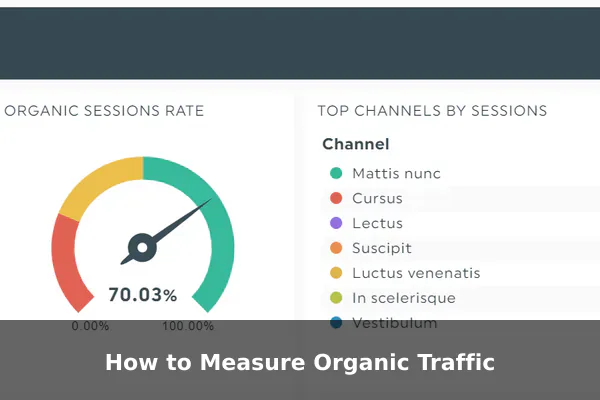
Knowing that organic traffic matters is one thing; tracking it accurately is another. Two free tools form the foundation of any organic traffic measurement setup:
Google Analytics
In Google Analytics 4 (GA4), navigate to Reports > Acquisition > Traffic Acquisition and filter by the Organic Search channel. This view shows how many people arrived from search engines and how they behaved after landing on your site. Key metrics to watch:
- Sessions: Total visits from organic search in a given period
- Users: Unique individuals who visited via organic search
- Engagement rate: Percentage of sessions with meaningful interaction
- Conversions: Goal completions — purchases, sign-ups, or form fills — from organic visitors
Google Search Console
Google Search Console gives you the search engine’s perspective on your organic performance. Under Performance > Search Results, you can review:
- Clicks: How many times users clicked your links in search results
- Impressions: How many times your pages appeared in results
- CTR (Click-Through Rate): The ratio of clicks to impressions — a low CTR on high-impression pages signals a title or meta description optimization opportunity
- Average Position: Where your pages typically rank for given queries
Using both tools together gives a complete picture. Analytics shows what happens after the click; Search Console shows what happens before it. Together they reveal where organic traffic is coming from, which pages earn the most visits, and where conversion opportunities exist.
How to Grow Organic Traffic
Growing organic traffic is a long-term investment, but the tactics are well-established and accessible to any marketer or site owner willing to apply them consistently.
Start with Keyword Research
Identify the exact search terms your target audience uses. Tools like Google Keyword Planner, Ahrefs, or Semrush help you find queries with meaningful volume and manageable competition. Prioritize keywords that match both your content strengths and the specific intent of your audience — informational queries for top-of-funnel content, transactional keywords for product or service pages.
Optimize On-Page Elements
For each piece of content, use your target keyword naturally in the page title, first paragraph, headings, and throughout the body copy. Write clear and compelling meta descriptions, use descriptive alt text on images, and structure content with logical headings so both readers and search engines can follow the page easily.
Publish High-Quality Content Consistently
Search engines reward content that genuinely helps users. Aim for depth, accuracy, and clarity. Answer the reader’s question completely, support points with data or examples, and revisit older articles periodically to keep them accurate and competitive. Consistency in publishing builds topical authority over time.
Build Backlinks Strategically
Backlinks — links from other websites pointing to yours — remain one of the strongest authority signals for search engines. Earn them by creating content worth citing, pitching guest posts to relevant publications, and developing relationships with other creators in your niche. Even a handful of high-quality backlinks can meaningfully lift rankings for important pages.
Address Technical SEO Fundamentals
Ensure your website is technically healthy: fast load times across devices, a mobile-friendly layout, clean URL structures, proper canonical tags to avoid duplicate content, and an XML sitemap submitted to Google Search Console. Technical issues can suppress rankings regardless of content quality — a slow or poorly structured site will underperform even excellent articles.
Prioritized action list for growing organic traffic:
- Conduct keyword research to identify high-value, achievable opportunities
- Optimize existing pages before spending time on new ones
- Publish consistently useful, in-depth content that matches search intent
- Build backlinks through outreach, guest posting, and linkable assets
- Fix technical SEO issues found via Search Console and site auditing tools
- Monitor performance monthly and iterate based on data
Organic traffic is not a shortcut — it is a strategy. It takes time to build, but the returns are durable, compounding, and grounded in genuine relevance rather than ad spend. For any business serious about long-term digital growth, organic traffic is not just one channel among many; it is often the most cost-efficient and self-sustaining engine available. By understanding what it is, recognizing it across real-world scenarios, and applying consistent SEO fundamentals, any marketer or site owner can begin turning search visibility into a reliable source of visitors, leads, and customers.
