

Marketing can look complicated from the outside. New terms appear everywhere, experts argue about the best channel, and every platform seems to promise faster growth if you just learn one more tool. That confusion causes many beginners to start in the wrong place. They jump into software, trends, or platform tricks before they understand the basic ideas that make marketing work in any setting.
The better approach is simpler. If you want to build marketing knowledge the right way, you do not need a big budget, a large audience, or years of experience. You need a clear foundation, a practical learning routine, and enough patience to connect what you study to real examples. When you learn the fundamentals first, new tactics make more sense, and you become much better at spotting what is useful versus what is just noise.
This guide explains simple steps to start with marketing knowledge the right way by focusing on the parts beginners often skip: understanding what marketing knowledge really includes, learning how to think about an audience, building a study system you can maintain, and practicing with real campaigns instead of abstract theory alone. By the end, you will have a realistic roadmap for turning basic understanding into usable skill.
What Marketing Knowledge Really Means for Beginners
Before you try to learn channels, campaigns, or analytics dashboards, it helps to define what marketing knowledge actually means. For a beginner, it is not about memorizing dozens of technical terms. It is about understanding how a business connects a useful offer to the right people with a clear message at the right time.
In other words, marketing knowledge is a working understanding of people, value, communication, and decision-making. It includes knowing why customers pay attention, what makes an offer feel relevant, and how different messages influence interest, trust, and action.
Marketing Knowledge Is More Than Tactics
Many beginners confuse marketing with visible tactics such as posting on social media, running ads, writing emails, or designing a landing page. Those are important activities, but they only work well when they are guided by deeper principles. A weak message does not become strong because it appears on a popular platform. A poor offer does not become attractive because it uses better design.
That is why the right starting point is not, “Which tool should I learn first?” A better question is, “What does a customer need to believe before taking action?” This shift changes how you study marketing. Instead of collecting random tactics, you begin learning how the parts fit together.
The Core of Beginner Marketing Understanding
For someone starting out, practical marketing knowledge usually includes these basics:
- Who the audience is and what problem they care about.
- What product, service, or offer is being presented.
- Why that offer feels valuable or different.
- How the message is framed in plain, persuasive language.
- Which channel makes sense for reaching that audience.
- What action the audience is being asked to take.
- How success is judged, even at a simple level.
Once you understand these pieces, you can study almost any campaign with more confidence. You stop seeing marketing as a collection of disconnected tricks and start seeing it as a system.
Why Beginners Often Learn It Backward
People often start backward because tactics are easier to notice than strategy. It is obvious when a brand posts a video or launches an ad. It is less obvious how much thinking went into the audience, the offer, the positioning, and the call to action behind it. But those invisible choices are often the reason a campaign works.
If you remember one principle from this section, let it be this: marketing knowledge starts with understanding why something should work before learning how to execute it faster.
Start With the Core Ideas That Drive Every Marketing Decision
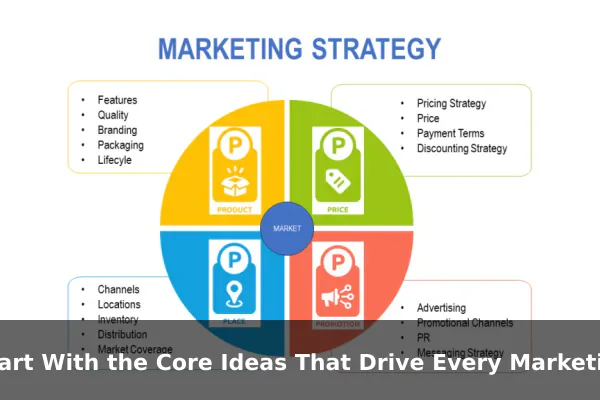
Once you understand the broad meaning of marketing knowledge, the next step is learning the core ideas that drive nearly every marketing decision. These ideas apply whether you are looking at a local bakery, a software company, an online course, or a freelance service.
Audience Comes First
The audience is not just a demographic group. It is a set of people with specific needs, frustrations, motivations, habits, and expectations. Good marketing starts by asking who the message is for and why that person would care. If that answer is vague, the marketing usually becomes vague too.
A beginner should get used to thinking in concrete terms. Instead of saying, “My audience is everyone who wants better results,” try something sharper: “My audience is first-time business owners who need an easier way to manage appointments without hiring extra staff.” Specificity improves every later decision.
The Value Proposition Gives People a Reason to Care
A value proposition explains why an offer is worth attention. It answers a simple question: Why this option instead of another one or instead of doing nothing? Beginners often describe features before they explain value. That leads to marketing that sounds busy but unconvincing.
When you study value propositions, train yourself to look for these elements:
- The problem being solved.
- The result being promised.
- The reason the offer is different or easier.
- The proof or logic that makes the promise believable.
If you can summarize those four parts clearly, your marketing thinking becomes much stronger.
Positioning Shapes Perception
Positioning is how an offer is placed in the mind of the audience. Two products can solve a similar problem but feel completely different because of positioning. One may feel premium and expert-led. Another may feel simple and beginner-friendly. Neither position is automatically better. The right choice depends on the audience and the business goal.
Beginners should study positioning because it teaches an important lesson: marketing is not only about being seen. It is also about being understood in the intended way.
Messaging Connects the Offer to the Audience
Messaging turns strategy into words. It includes headlines, descriptions, calls to action, benefits, objections, tone, and examples. Clear messaging reduces mental effort for the audience. It tells people what the offer is, why it matters, and what to do next.
Strong beginner messaging usually has these qualities:
- It uses simple language instead of internal jargon.
- It emphasizes outcomes rather than just features.
- It anticipates hesitation or confusion.
- It leads naturally to one next action.
Channels Are Delivery Systems, Not Magic Solutions
Channels matter, but beginners often give them too much power. Email, search, social media, paid ads, events, content, and referrals are all just ways to deliver a message. No channel can rescue weak fundamentals. A clear offer to the right audience on a modest channel usually performs better than a weak offer promoted everywhere.
That is why it makes sense to learn channels after you understand the message and the audience. Otherwise, you end up studying distribution without understanding what deserves to be distributed.
Goals Keep Learning Practical
Even early marketing knowledge should include a basic sense of goals. Are you trying to build awareness, generate leads, increase sales, get sign-ups, or bring back past customers? The answer changes how you evaluate messaging, channels, and success.
For beginners, goals do not need to be complex. They just need to be clear enough to guide learning. A simple goal such as “get ten email sign-ups from a landing page draft” teaches more than vague ambition.
Learn Your Audience Before You Learn More Tools
One of the easiest ways to waste time in marketing is to study tool after tool without understanding the people you want to reach. Tools can improve speed, reporting, publishing, and testing, but they do not create relevance. Relevance comes from audience understanding.
If you are new to marketing knowledge, audience learning should become a habit, not a one-time task. The more clearly you understand customer language, pain points, and decision triggers, the easier it becomes to write better messages and choose smarter tactics.
What You Need to Know About an Audience
You do not need a giant research project to begin. Start with practical questions:
- What problem is this person trying to solve?
- What makes that problem frustrating or expensive?
- What solutions have they already tried?
- What would make them trust a new option?
- What concerns might stop them from acting?
- Where do they usually look for information?
These questions help you think beyond broad categories. Age and location can matter, but they rarely explain enough by themselves. Motivations and barriers are usually more useful.
Low-Cost Ways to Build Audience Insight
Beginners often assume they need professional tools to learn about an audience. In reality, you can start with accessible sources of insight:
- Read product reviews in your industry and note repeated complaints.
- Browse discussion forums and look for the exact words people use.
- Study comments under relevant videos, posts, or newsletters.
- Review competitor websites and identify the benefits they emphasize.
- Talk directly to customers, coworkers, or friends who fit the audience.
The goal is not to collect perfect data. The goal is to become more specific and less speculative. Good marketers are often better listeners than beginners expect.
Focus on Language, Not Just Information
When you observe an audience, pay close attention to phrasing. The words people naturally use reveal how they frame the problem. A customer may not say, “I need workflow optimization.” They may say, “I waste too much time chasing updates.” That difference matters because better marketing mirrors the audience’s reality, not the brand’s internal vocabulary.
As you study, create a running note with three columns:
- Problem phrases people use.
- Desired outcomes they mention.
- Common objections or doubts.
This simple habit makes future writing much easier and gives your learning direction.
Why Tool Obsession Slows Down Real Progress
Software can be useful, but it often creates a false sense of progress. Watching tutorials about automation, analytics, or ad settings can feel productive because it is structured and technical. But if you do not understand the audience, those tools become expensive ways to scale unclear thinking.
The right sequence is usually this: audience insight first, clearer messaging second, tools third. That order helps beginners avoid the common trap of becoming tool-aware but market-blind.
Build a Simple Learning Plan You Can Actually Follow

Many people fail to build marketing knowledge because they try to learn everything at once. They read random articles, watch disconnected tutorials, and switch topics every few days. That creates information exposure, not meaningful understanding.
A better method is to create a simple learning plan that fits real life. The goal is consistency, not intensity. Thirty focused minutes several times a week will usually teach more than occasional bursts of overloaded study.
Use a Beginner-Friendly Learning Mix
Your plan should combine three kinds of input:
- Core learning: beginner articles, trusted educational videos, or books that explain principles.
- Observation: real marketing examples from brands, creators, local businesses, and competitors.
- Application: short exercises where you rewrite, analyze, or build something yourself.
When these three elements stay connected, your learning becomes much more practical. You are not just collecting ideas. You are training your judgment.
A Weekly Routine That Works for Most Beginners
You do not need a complicated system. A straightforward weekly cycle is enough:
- Choose one topic for the week, such as audience, messaging, or calls to action.
- Read or watch one or two foundational resources on that topic.
- Collect three real examples related to it.
- Write down what each example does well or poorly.
- Create one small practice piece, such as a headline, short email, or social caption.
- Review your notes at the end of the week and list your main lesson.
This routine works because it combines input, analysis, and output. That is how knowledge begins turning into skill.
Keep a Simple Marketing Notebook
One underrated way to learn marketing is to keep your own notes in an organized format. Your notebook can be digital or physical, but it should be easy to review. Divide it into sections such as:
- Audience insights
- Good headlines and why they work
- Offer ideas
- Call-to-action examples
- Questions you still do not understand
- Lessons from campaigns you studied
This becomes a personal reference library built from your own observations. Over time, it teaches you to recognize patterns instead of relying on memory alone.
Study Narrowly Before You Study Broadly
At the beginning, avoid jumping between too many disciplines. You do not need to master brand strategy, analytics, SEO, advertising, email, conversion optimization, and content creation all at once. That usually leads to shallow understanding everywhere.
It is more effective to spend a few weeks learning a small set of connected concepts deeply. For example, focus first on audience, value proposition, and messaging. Once those are clearer, expand into channels and measurement. This sequence keeps your learning grounded.
Use Questions to Guide Your Study
Each week, try to answer a few practical questions:
- Who is this message trying to attract?
- What problem does it highlight?
- What promise is being made?
- Why might someone believe or doubt it?
- What action is the audience being asked to take?
These questions sharpen your attention. They also prevent passive learning, which is one of the main reasons beginners stay stuck.
Practice by Breaking Down Real Marketing Examples
If you want marketing knowledge to become usable, you need to practice interpretation. One of the best beginner exercises is to break down real examples and identify the thinking behind them. This method is powerful because it trains you to see structure inside everyday marketing.
What to Look for in Any Example
Whether you are reviewing an ad, an email, a product page, or a social post, start with the same core checklist:
- Who seems to be the target audience?
- What pain point or desire is being addressed?
- What benefit is being emphasized most strongly?
- What proof, detail, or emotional cue supports the claim?
- What action is the audience expected to take next?
This gives you a repeatable structure. You are no longer reacting with “I like this” or “I do not like this.” You are learning to evaluate why it may work.
Break Down Ads for Clarity and Promise
Ads are useful because they force a brand to communicate quickly. When studying an ad, ask whether the message becomes clear within seconds. Look for the hook, the main promise, the offer, and the visual choice. If the ad feels confusing, identify exactly where the confusion starts. Is the benefit weak? Is the target audience unclear? Is the call to action too vague?
This kind of practice builds one of the most valuable beginner skills: recognizing when a message fails to earn attention.
Study Emails for Structure and Momentum
Email is helpful for learning because it often shows a full argument in a small space. A strong email usually has a subject line that earns the open, an opening that builds curiosity or relevance, body copy that explains the value, and a call to action that feels natural rather than forced.
As you review emails, notice pacing. Good emails do not dump every fact at once. They move the reader from interest to understanding to action. This teaches an important marketing lesson: sequence matters.
Use Landing Pages to Learn Offer Design
Landing pages are excellent study material because they combine positioning, copy, proof, and conversion goals in one place. Look at the top section first. Does the page make the offer understandable quickly? Then review the rest. Does it answer common objections? Does it add proof through testimonials, numbers, or explanation? Does each section support the same main action?
Many beginners improve rapidly once they start reviewing landing pages with this lens. The page stops feeling like a design object and starts feeling like a decision path.
Analyze Social Posts for Attention and Relevance
Social content teaches different lessons. It shows how brands compete for attention in fast-moving environments. Strong social posts usually have a clear angle, quick relevance, and a format that suits the platform. Some educate, some entertain, some provoke curiosity, and some guide the audience toward a deeper asset.
Do not only ask whether a post looks good. Ask whether it matches the audience, the brand voice, and the likely next step. That is a more mature way to study marketing.
Build a Swipe File With Notes, Not Just Screenshots
Saving examples is useful, but saving them without explanation limits the value. Build a swipe file where each saved example includes a short note about why it caught your attention. For example:
- Strong headline because it names a specific pain point.
- Good call to action because it lowers commitment.
- Convincing proof because it makes the promise feel real.
- Weak message because the audience is too broad.
This transforms inspiration into analysis, which is far more useful for long-term learning.
Mistakes That Slow Down New Marketers
Even motivated beginners can lose momentum if they develop the wrong habits early. The goal is not to avoid every mistake, because some mistakes are part of learning. The real goal is to avoid patterns that waste time and block understanding.
Chasing Trends Before Learning Fundamentals
New marketers often rush toward whatever platform or tactic is getting the most attention. The problem is that trend-driven learning creates shallow knowledge. You may learn what is popular without understanding why it works, when it works, or for whom it works.
Fundamentals age more slowly. Audience insight, clear positioning, useful offers, persuasive messaging, and relevant calls to action remain valuable even as channels change.
Copying Tactics Without Context
It is common to see a successful campaign and try to copy the visible format. But visible format is only part of the story. A tactic that works for a trusted brand with a warm audience may fail for a beginner with no existing credibility. Context matters: audience awareness, offer quality, timing, competition, and trust level all influence results.
Instead of copying exactly, ask what underlying principle made the tactic work. Then adapt that principle to a different situation.
Confusing Activity With Progress
Beginners sometimes feel productive because they are busy. They create more posts, try more tools, and collect more templates. But volume alone is not progress. If the underlying message stays unclear, output just multiplies confusion.
Real progress usually looks like this:
- Your audience definition becomes sharper.
- Your messaging becomes easier to understand.
- Your examples become more intentional.
- Your analysis becomes more specific.
- Your experiments teach you something repeatable.
These are better signs of growing marketing knowledge than raw activity.
Measuring Too Much Too Early
Metrics matter, but beginners can become distracted by numbers before they understand the behaviors behind them. If you are learning, do not begin with a complicated dashboard. Start by asking basic questions. Did people understand the message? Did they click? Did they reply? Did one version create more interest than another?
Simple measurements keep attention on learning. Once your understanding grows, deeper analysis becomes more useful.
Skipping Reflection
One of the most damaging beginner mistakes is failing to review what you studied or tested. Without reflection, learning becomes temporary. A campaign example may seem interesting in the moment, but if you never write down what it taught you, the lesson fades quickly.
Reflection does not need to take long. A short weekly review that answers “What did I notice? What worked? What confused me? What will I study next?” is enough to create continuity.
Simple Next Steps to Turn Knowledge Into Skill
At some point, marketing knowledge has to leave your notes and become action. The best transition is not a giant project. It is a small, controlled practice effort where you can apply what you have learned and review the results calmly.
Choose One Channel and One Offer
Do not try to be everywhere. Pick one channel you can observe and use consistently, such as email, a simple landing page, a small social account, or short-form content. Pair it with one offer, even if the offer is basic. This gives your practice a clear focus.
Limiting scope is useful because it lets you compare changes. When too many variables move at once, it becomes hard to learn what actually made the difference.
Create Small Practice Projects
Good beginner projects are simple enough to finish but structured enough to teach something. Examples include:
- Write three headlines for the same offer aimed at three different audiences.
- Draft one landing page for a fictional product with a clear call to action.
- Rewrite a weak social post so the value is clearer in the first sentence.
- Analyze five ads in the same category and compare their promises.
- Build a short email sequence for a welcome or follow-up message.
These projects train practical judgment. They also create a record of improvement over time.
Use a Simple Review Loop
After each exercise or mini-project, review it with a few direct questions:
- Was the audience clear?
- Was the offer understandable quickly?
- Did the message focus on value instead of filler?
- Was the call to action obvious?
- What would I improve in the next version?
This kind of self-review helps beginners develop discipline. It keeps practice from becoming random output.
Learn Slowly Enough to Notice Patterns
There is pressure to move fast in marketing, but beginners often improve more by slowing down and observing carefully. If you study ten weak examples in one hour, you may forget them all. If you study two strong examples deeply and write down why they work, you gain reusable understanding.
Pattern recognition is what eventually separates a confident marketer from someone who only memorizes tactics. That ability grows from repeated, focused observation over time.
Build Confidence Through Repetition, Not Hype
Confidence in marketing should come from seeing the same principles appear again and again in different forms. You notice how strong offers reduce friction. You notice how better audience language improves response. You notice how clearer calls to action create smoother decisions. That kind of confidence is more stable than motivation built on trends or excitement.
When your learning becomes grounded in repetition and reflection, your marketing knowledge becomes much more dependable.
Conclusion: Start Simple and Stay Consistent
The right way to begin marketing knowledge is not by trying to master every channel, tool, or trend at once. It is by understanding the fundamentals that shape every good decision: audience, value, positioning, messaging, channels, and goals. From there, the smartest path is steady practice, careful observation, and small projects that help theory become skill.
Simple steps to start with marketing knowledge the right way are often the most effective steps: learn the core ideas, study real examples, keep a useful notebook, build a manageable routine, and apply what you learn in small experiments. If you stay consistent, marketing stops feeling like a pile of jargon and starts becoming a clear, learnable system that you can use with confidence.
