
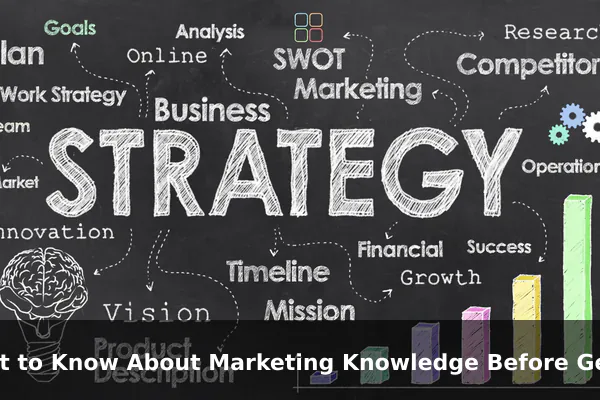
Most people who begin learning about marketing jump straight into tactics — posting on social media, running ads, or writing blog posts — without first understanding what marketing knowledge actually covers. This eagerness is understandable, but it often leads to wasted effort, confusing results, and frustration when nothing seems to work.
Marketing knowledge is not a single skill or a list of tools to master. It is a connected body of understanding that spans how customers think, how messages land, how channels work, and how results are measured. Before choosing any tactic or platform, building that foundational understanding changes everything about how you approach decisions and avoid costly early mistakes.
This guide is designed for anyone at the starting point — whether you are promoting a business for the first time, switching careers into a marketing role, or simply trying to make sense of what marketing actually involves. The goal is not to overwhelm you with terminology. It is to give you a clear and honest picture of what you need to know before you take your first real step.
What Marketing Knowledge Means in Practice

Marketing knowledge is often misunderstood as knowing how to advertise. In reality, advertising is just one small piece. True marketing knowledge covers a wide range of interconnected disciplines, and understanding how they relate to each other is what separates effective marketers from those who simply try random things and hope for results.
At its core, marketing knowledge includes the following areas:
- Customer insight: Understanding who your audience is, what they care about, what problems they face, and how they make decisions.
- Messaging and positioning: Knowing how to communicate your offer in a way that resonates clearly with the right people.
- Channel awareness: Understanding the different platforms and methods available — and when each one is appropriate.
- Measurement and analysis: Knowing which numbers to track and what they tell you about performance.
- Strategy and planning: Being able to connect all of the above into a coherent direction instead of a collection of disconnected tasks.
When beginners treat marketing as a set of isolated tactics, they struggle to understand why something works or fails. When they treat it as a system of connected knowledge, every decision becomes clearer and more intentional. That shift in perspective is one of the most valuable things you can develop before getting started.
Start With Audience and Market Understanding
Before writing a single piece of content or spending a dollar on advertising, you need a working understanding of who you are trying to reach. This is not about creating a fictional ideal customer from scratch — it is about doing enough research to identify real patterns in how your potential customers think and behave.
Identify the Problem You Are Solving
Every effective marketing effort starts with a problem. Customers do not buy products or services — they buy solutions to specific frustrations, goals, or desires. Before you can communicate your offer effectively, you need to understand the exact problem your audience is experiencing and how they would describe it in their own words.
This matters because the language you use in marketing should mirror the language your audience uses when they talk about their own challenges. A mismatch between how you describe your offer and how your audience describes their problem creates friction that makes even a great product feel irrelevant.
Study How Your Audience Makes Decisions
Consumer behavior — the process by which people move from recognizing a problem to choosing a solution — varies depending on the category, price point, and emotional stakes involved. Some purchases are impulsive and emotional. Others involve extended research and comparison. Understanding where your offer sits on that spectrum helps you design the right kind of marketing experience.
Know What the Competition Is Doing
Competitor awareness is an essential part of early marketing knowledge. You do not need a full competitive analysis before your first campaign, but you do need to understand what alternatives your audience is already aware of. This shapes your positioning, your messaging, and the unique angle you take when presenting your offer.
Look at how competitors describe themselves, what promises they make, and where they seem to fall short based on customer reviews or feedback. That gap is often where the strongest marketing message lives.
Know Your Offer, Positioning, and Value
One of the most common reasons early marketing efforts fail is not a lack of effort or budget — it is a lack of clarity about what is actually being offered and why it matters. Before choosing any marketing channel, you need to be able to answer three questions clearly:
- What does your offer actually do for the customer?
- Who specifically is it best suited for?
- Why should they choose you over available alternatives?
Understand Product-Market Fit
Product-market fit describes the degree to which your offer genuinely matches what a specific segment of the market wants. When fit is strong, marketing becomes easier because the message resonates naturally. When fit is weak, even the best campaign struggles because the underlying offer does not solve a real need in a compelling way.
Beginners often assume that marketing can compensate for a weak offer. It rarely does. Developing early marketing knowledge means recognizing that your offer itself is a foundational element of your marketing strategy, not separate from it.
Build a Clear Value Proposition
A value proposition is a plain-language statement that explains what you offer, who it is for, and what benefit it delivers. It is not a slogan or a tagline — it is the core message that everything else in your marketing is built around. A strong value proposition is specific, outcome-focused, and easy for your target audience to understand immediately.
Weak value propositions tend to be vague, filled with industry jargon, or focused on features rather than outcomes. Before running any campaign, test your value proposition by explaining it to someone unfamiliar with your industry and asking if they immediately understand the benefit.
Learn the Core Marketing Channels Before Choosing One
One of the most confusing parts of building early marketing knowledge is the sheer number of channels available. Social media, search engines, email, content, paid advertising, referrals, and more — each one has its own logic, audience behavior, and time-to-result. Trying to use all of them at once is a common and costly beginner mistake.
The goal here is not to master every channel. It is to understand the basic role each one plays so that you can make an informed choice about where to focus your early efforts.
Organic Channels: Content, SEO, and Social Media
Content marketing involves creating useful, relevant material — articles, videos, guides, or podcasts — that attracts your target audience by providing value before asking for anything in return. It builds trust over time and can drive consistent traffic, but results typically take months to develop.
SEO (Search Engine Optimization) is the practice of making your content and website more visible in search engine results. When someone searches for a problem your offer solves, appearing in those results is extremely valuable. SEO requires patience and consistency but delivers compounding returns over time.
Social media marketing uses platforms like Instagram, LinkedIn, X (formerly Twitter), or TikTok to build an audience, share content, and engage directly with potential customers. The right platform depends entirely on where your specific audience spends their time, not on personal preference or what seems trendy.
Paid Channels: Ads and Sponsored Content
Paid advertising — through search engines, social platforms, or display networks — allows you to reach targeted audiences quickly in exchange for a budget. The advantage is speed and control. The risk is that results stop the moment you stop spending, and poorly targeted ads burn through budgets without delivering returns.
Paid channels are most effective when the fundamentals are already in place: a clear offer, a specific audience, and a strong value proposition. Using paid advertising to test an unclear message at the beginning often produces discouraging results.
Referral and Relationship Channels
Word-of-mouth, referral programs, partnerships, and direct outreach are among the most cost-effective marketing channels available, especially for businesses just getting started. These channels rely on trust and relationships rather than content or budget, and they often produce the highest-quality leads because they come with a built-in recommendation.
Understand Goals, Metrics, and Basic Funnel Thinking
Marketing without measurement is guesswork. One of the most important pieces of knowledge you can build before getting started is a basic understanding of how marketing goals connect to measurable outcomes — and how to use simple data to improve over time.
The Basic Marketing Funnel
The marketing funnel is a way of describing the journey a potential customer takes from first becoming aware of your offer to eventually becoming a paying customer. The stages typically look like this:
- Awareness: The potential customer learns that you exist.
- Consideration: They evaluate whether your offer matches their need.
- Conversion: They take the desired action — a purchase, a signup, or an inquiry.
- Retention: They remain a customer and potentially become a repeat buyer or advocate.
Understanding the funnel helps you diagnose problems. If you have high traffic but low conversions, the issue is likely in your messaging or offer. If you have strong conversions but poor retention, the issue may be in the product or post-purchase experience. The funnel gives you a framework for asking the right questions.
Metrics That Matter Early On
You do not need to track dozens of metrics when you are first getting started. A small set of core numbers will tell you most of what you need to know:
- Traffic: How many people are reaching your content, website, or offer.
- Conversion rate: The percentage of visitors who take a desired action.
- Cost per acquisition (CPA): How much you spend to gain one new customer.
- Customer lifetime value (CLV): How much revenue a customer generates over time.
These four metrics, tracked consistently, give you a clear picture of whether your marketing is working and where to focus improvement efforts.
Common Beginner Mistakes That Slow Marketing Growth
Building marketing knowledge is not just about learning what to do — it is equally about recognizing what to avoid. Several patterns consistently slow down beginners who might otherwise make good early progress.
Skipping Research and Jumping to Tactics
The desire to start doing something visible — posting content, running ads, sending emails — is understandable. But skipping the research phase means building on an unstable foundation. Campaigns that launch without audience understanding or clear positioning tend to underperform and produce confusing data that is hard to act on.
Trying to Be on Every Platform at Once
Every marketing channel requires consistent attention to produce results. Spreading effort across five or six platforms simultaneously almost always results in poor performance on all of them. Beginners are far better served by choosing one or two channels that genuinely suit their audience and committing to doing those well before expanding.
Copying Competitors Without Understanding Why
Watching what competitors do is valuable, but blindly replicating their approach without understanding the reasoning behind it is a mistake. What works for an established brand with an existing audience, strong budget, and proven positioning may not work for a brand that is just getting started.
Ignoring Measurement Entirely
Running marketing campaigns without tracking results means missing the feedback loop that makes improvement possible. Even basic tracking — using free tools like Google Analytics or built-in platform analytics — gives you enough data to understand what is working and what needs adjustment.
Treating Marketing as a One-Time Push
Marketing is not a switch you flip once. It is a continuous process of testing, learning, refining, and repeating. Beginners who expect immediate results from a single campaign often abandon their efforts prematurely, just before the compounding effects of consistency would have started to show.
How to Build Marketing Knowledge Step by Step
You do not need to complete a marketing degree or read every book on the subject before getting started. Marketing knowledge is best developed progressively — through a combination of structured learning, direct observation, small experiments, and honest reflection on results.
Start With Foundations, Not Tactics
Before exploring specific tools or channels, invest time in understanding the core concepts that underpin all marketing: audience research, value propositions, positioning, messaging, and measurement. These foundations apply to every channel and every type of business, which makes them the highest-return area of early learning.
Observe Before You Act
Before creating your own content or launching your own campaigns, spend time paying attention to marketing that already exists in your industry. Notice what messages seem to resonate, how competitors frame their offers, what kind of content gets engagement, and what patterns repeat across successful brands. This observational phase builds practical pattern recognition that is difficult to get from theory alone.
Run Small, Low-Risk Experiments
Once the foundations are in place, the fastest way to build real marketing knowledge is through direct experience. Design small tests with clear goals — a single piece of content, a small ad campaign, or an email sequence. Set a specific hypothesis before you start (for example, “I expect this message to resonate more than the current one because…”), track the results, and review what the data tells you.
Build Simple Frameworks for Repeated Decisions
Marketing involves many recurring decisions — what to post, who to target, what to measure, how to allocate budget. Building simple personal frameworks for each of these decisions reduces the cognitive load and keeps your approach consistent. Over time, these frameworks become instincts grounded in actual experience rather than guesswork.
Review and Adjust Regularly
Set a regular cadence for reviewing your results — weekly or monthly depending on the volume of activity. Ask consistently: What performed better than expected? What underperformed? What did I learn? What will I do differently next time? This discipline of regular review is what separates marketers who grow steadily from those who stay stuck in the same patterns.
Bringing It All Together
Marketing knowledge is not a fixed destination — it is a continuously expanding understanding that grows with every campaign, every data point, and every customer interaction. But that journey has to start somewhere, and the best starting point is not a specific tool or platform. It is a clear picture of what marketing actually involves and why the foundational elements matter before anything else.
By understanding your audience before choosing tactics, clarifying your value before spending on promotion, learning the role of each channel before committing to one, and building the habit of measurement from the very beginning, you give yourself the foundation that most beginners skip entirely. That foundation does not just make your first efforts more effective — it makes every effort after that easier to learn from and improve upon.
Marketing knowledge compounds over time. The clearer your understanding at the start, the faster you will be able to recognize patterns, diagnose problems, and make confident decisions as your skills and your business grow.
