
Most brands produce content every week — blog posts, social updates, videos — yet struggle to see meaningful results. The reason is almost always the same: they’re creating content without a strategy. Publishing regularly is not the same as publishing purposefully.
A content strategy is the plan that connects what you create to what your business actually wants to achieve. It answers who you’re creating for, what you’ll produce, where you’ll share it, and how you’ll measure success. Without it, content becomes noise. With it, content becomes a growth engine.
This article explains what content strategy really means, breaks down its core components, walks through the practical process, and shows what it looks like with real-world examples.
What Content Strategy Actually Means
Content strategy is often confused with content marketing, and the two are related — but they’re not the same thing. Content marketing is the execution: the blog posts, videos, newsletters, and podcasts you publish to attract and retain an audience. Content strategy is the plan that governs all of that execution.
Think of content strategy as the blueprint and content marketing as the construction. You can build something without a blueprint, but you’ll waste materials, hit structural problems, and end up with something that doesn’t quite work.
A content strategy defines:
- Why you’re creating content and what business outcome it should drive
- Who your target audience is and what they need at each stage of their journey
- What types of content you’ll produce and on which channels
- How content will be created, distributed, and maintained over time
- How you’ll measure whether the content is working
It’s a deliberate, documented plan — not just an editorial calendar or a publishing schedule.
Core Components of a Content Strategy
Every effective content strategy is built on a set of foundational elements. These components work together to give your content direction and purpose.
Audience Definition
The first building block is a clear picture of who you’re writing for. This goes beyond basic demographics. You need to understand your audience’s goals, pain points, questions, and the language they use. Buyer personas and audience research help ground your content in real human needs rather than assumptions.
Goals and KPIs
What should your content accomplish? Common goals include increasing organic traffic, generating leads, building brand authority, or retaining existing customers. Each goal should be paired with a specific metric — organic sessions, conversion rate, email subscribers, or churn rate — so you can track progress.
Content Types and Channels
Different audiences consume content differently. Some prefer long-form blog posts, others prefer short videos or newsletters. Your strategy should specify which formats you’ll use and where you’ll publish — your own website, YouTube, LinkedIn, email, or a combination.
Voice and Tone
Your content should sound consistent across every piece you publish. Defining your brand voice — whether authoritative, friendly, educational, or conversational — ensures that content from different writers or departments still feels like it comes from one brand.
Distribution Plan
Great content that no one sees doesn’t work. Your strategy should include how you’ll promote each piece — through SEO, social media, email newsletters, paid amplification, or partnerships. Distribution is just as important as creation.
The Content Strategy Process Step by Step
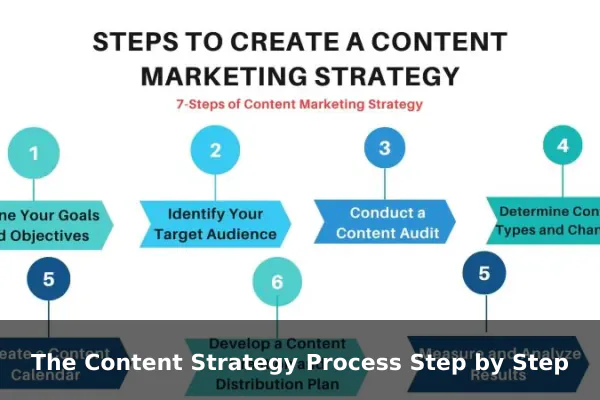
Building a content strategy follows a logical sequence. Here’s how to move from zero to a working plan:
- Audit existing content. If you’ve published anything before, start by reviewing what you have. What’s performing well? What’s outdated or underperforming? A content audit prevents duplicated effort and reveals gaps you can fill.
- Define your goals. Choose one to three specific, measurable goals tied to business outcomes. “More traffic” is not a goal. “Increase organic traffic by 30% in six months” is.
- Research your audience. Use surveys, interviews, keyword research, and analytics to understand what your target audience is searching for, asking, and struggling with. This step ensures your content answers real questions.
- Map content to funnel stages. Match content types to where your audience is in their buying journey. Awareness-stage readers need educational blog posts. Consideration-stage readers need comparison guides and case studies. Decision-stage readers need testimonials and demos.
- Create and distribute. Execute on your plan — write, design, record, publish, and promote. Stick to a realistic production schedule your team can actually maintain.
- Measure and iterate. Review your KPIs regularly. What content is driving the most traffic, leads, or conversions? Use that data to double down on what works and improve or cut what doesn’t.
This process is not a one-time event. Effective content strategy is an ongoing cycle of planning, execution, and refinement.
Real-World Content Strategy Examples
Abstract definitions are useful, but seeing how real brands apply content strategy makes the concept concrete.
HubSpot: Inbound Through Education
HubSpot built one of the most recognized content strategies in B2B marketing. Their approach centers on publishing comprehensive, SEO-optimized educational content — blog posts, guides, and free tools — targeting every stage of the marketing and sales funnel. By providing genuine value upfront, they attract millions of organic visitors who eventually become leads for their software. The strategy works because every piece of content connects to a clear business goal: customer acquisition.
Patagonia: Mission-Driven Storytelling
Patagonia’s content strategy is built around their environmental mission rather than product features. Their blog, films, and social content tell stories about conservation, activism, and the outdoors. This builds deep brand loyalty among outdoor enthusiasts who share those values. It’s a content strategy that differentiates through purpose, not promotion.
B2B SaaS Brands: Case Studies as Conversion Tools
Many B2B software companies use detailed customer case studies as a core content strategy element. By documenting how real clients solved specific problems — and quantifying the results — they create content that serves decision-stage buyers directly. A prospect evaluating software sees proof, not promises. This approach shortens sales cycles because the content does persuasion work that a sales rep would otherwise have to do manually.
Common Content Strategy Mistakes to Avoid
Even well-intentioned content programs fail when they fall into predictable traps. Here are the most costly mistakes and how to sidestep them.
Creating Content Without Audience Research
Publishing content based on what you think your audience wants — rather than what they actually search for and ask about — leads to content that gets ignored. Keyword research, customer interviews, and analytics data should drive your topic selection, not internal assumptions.
Ignoring Distribution
Many brands pour resources into creating content, then simply publish it and hope people find it. Content without a distribution plan rarely gets seen. Every piece needs a promotion strategy — SEO optimization, email broadcasting, social sharing, and outreach.
Not Measuring Results
If you’re not tracking performance, you can’t improve. Brands that skip measurement end up repeating the same ineffective content patterns indefinitely. Set KPIs from the start and review them on a regular cadence.
Confusing Quantity With Quality
Publishing more content is not the same as publishing better content. A single comprehensive, well-researched piece often outperforms ten thin, rushed articles. Prioritize depth and relevance over volume.
How to Start Building Your Content Strategy Today
You don’t need a 50-page document to get started. A lean content strategy is better than no strategy at all. Here’s how to begin right now:
- Pick one goal. Choose a single business outcome your content should support — organic traffic, lead generation, or brand awareness. Focus beats breadth when you’re starting out.
- Define one audience segment. Choose the audience group that matters most to your current business goals and write a short description of who they are, what they want, and what problems they’re trying to solve.
- Choose two content formats. Don’t try to do everything. Select two formats — for example, a blog and an email newsletter — and commit to those before expanding.
- Set one metric. Pick one number that will tell you if your strategy is working. Track it monthly and let the data guide your next decisions.
Content strategy doesn’t require perfection. It requires clarity. Once you know who you’re creating for, what you want to achieve, and how you’ll measure success, every piece of content you publish becomes more intentional — and more effective.
The brands that consistently win with content aren’t necessarily publishing the most. They’re publishing the most purposefully. That purposefulness starts with a strategy.
