
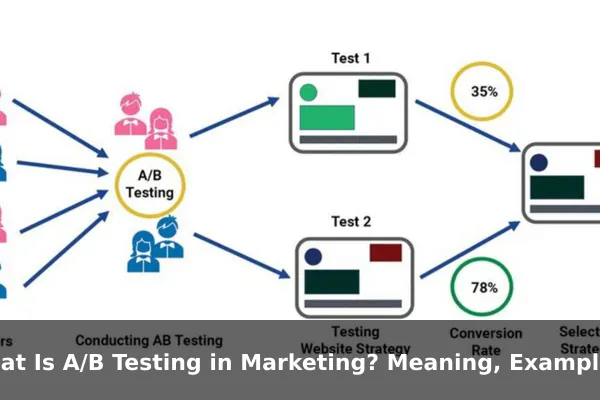
Modern marketing teams no longer have to guess which headline, button color, or email subject line will perform best. Instead of debating opinions in a meeting, they can let real customer behavior decide. That is the essence of A/B testing, a controlled experiment that compares two versions of a marketing asset to see which one drives better results.
A/B testing has become one of the most reliable tools in a marketer’s playbook because it replaces intuition with measurable evidence. Whether the goal is more sign-ups, higher click-through rates, or improved revenue per visitor, a well-designed split test can reveal what truly moves the needle. This guide explains what A/B testing means, how it works, the elements you can test, real-world examples, and the benefits it brings, drawing on accepted practices from leading experimentation platforms.
What A/B Testing Means in Marketing
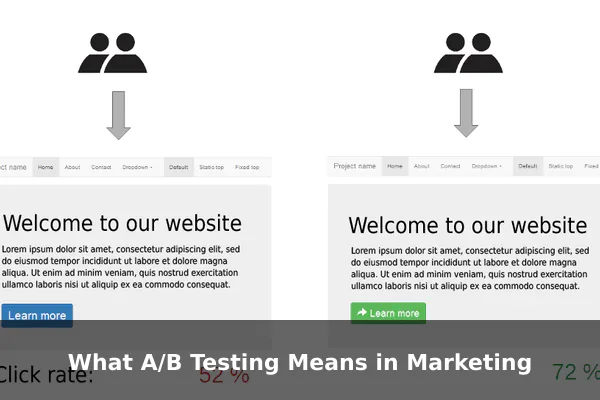
A/B testing, sometimes called split testing, is a method of comparing two versions of a marketing asset by showing each version to a randomly assigned segment of your audience and measuring which one performs better on a predefined goal. The version that currently exists is usually called the control (Version A), while the new version being tested is called the variant (Version B).
According to guidance from Harvard Business Review and platforms such as Optimizely and VWO, the value of A/B testing lies in its scientific structure: every visitor is randomly assigned, traffic is split fairly, and the difference in outcomes can be attributed to the change being tested rather than to chance or external factors.
Core Elements of an A/B Test
- Hypothesis: A clear prediction such as, “Changing the CTA from ‘Submit’ to ‘Get My Free Quote’ will increase form completions.”
- Control and variant: The current version and the new version you are comparing.
- Sample: The audience randomly split between the two versions.
- Primary metric: The single most important number you will use to declare a winner, such as conversion rate or click-through rate.
- Statistical significance: The confidence level (commonly 95%) that the observed difference is real, not random noise.
A/B vs. A/B/n vs. Multivariate Testing
It helps to distinguish A/B testing from related approaches:
- A/B testing: Two versions, one variable changed.
- A/B/n testing: Three or more versions tested against one another, useful when you have several distinct ideas.
- Multivariate testing (MVT): Multiple elements changed simultaneously to discover which combinations work best, typically requiring a larger audience to reach reliable results.
How an A/B Test Actually Works
Running an A/B test is more than swapping two images and picking a winner. Established platforms generally describe a similar lifecycle for designing reliable experiments.
Step 1: Form a Hypothesis
Start with data. Use analytics, heatmaps, surveys, or user interviews to identify a friction point or opportunity. Then frame a hypothesis with three parts: change, expected outcome, and reason. Example: “If we move social proof above the fold, sign-ups will increase because new visitors hesitate without trust signals.”
Step 2: Choose a Primary KPI
Pick one main metric tied to business value, such as conversion rate, revenue per visitor, or email open rate. Tracking secondary metrics is fine, but a winner should be declared on the primary KPI to avoid cherry-picking results.
Step 3: Calculate Sample Size and Test Duration
Before launching, estimate how many visitors you need to detect a meaningful difference. Most A/B testing tools include a built-in sample size calculator. Running a test for too few visitors or too short a time, often less than one full business cycle, can produce misleading conclusions.
Step 4: Split Traffic Randomly
The testing platform randomly assigns each visitor to either the control or the variant, typically using a 50/50 split. Random assignment is what makes the comparison fair and reduces the influence of confounding factors like device type or traffic source.
Step 5: Analyze and Decide
Once the test reaches its predetermined sample size and statistical significance, analyze the results. If the variant wins, roll it out to all traffic. If results are inconclusive, document the learning and design the next test. Even “losing” tests are valuable because they prevent costly mistakes.
Common Marketing Elements You Can A/B Test
Almost any visible or measurable element in a marketing funnel can be tested. The trick is to focus on changes that are likely to influence behavior, not minor cosmetic tweaks.
Website and Landing Pages
- Headlines: Benefit-driven vs. feature-driven phrasing.
- Calls-to-action (CTAs): Copy, color, size, and placement.
- Hero images and videos: Static photo vs. short demo video.
- Form fields: Number, order, and labeling.
- Social proof: Testimonials, ratings, or trust badges.
Email Marketing
- Subject lines: Length, tone, personalization, and use of emojis.
- Sender name: Brand name vs. a person’s name.
- CTA placement: Single primary button vs. multiple links.
- Send time: Different days of the week or times of day.
Paid Ads
- Ad creatives: Image vs. carousel vs. short video.
- Ad copy: Pain-point hook vs. benefit hook.
- Audience targeting: Interest-based vs. lookalike audiences.
- Landing page match: Generic homepage vs. dedicated landing page.
Pricing and Checkout
- Pricing display: Monthly vs. annual emphasis, anchor pricing, or strikethrough discounts.
- Checkout flow: One-page vs. multi-step.
- Guest checkout: Optional account creation vs. forced sign-up.
Real-World Examples of A/B Testing in Action
The following examples are illustrative scenarios commonly described in experimentation literature. Actual results will vary by industry, audience, and traffic volume, so treat them as instructive rather than guaranteed outcomes.
Example 1: CTA Copy on a SaaS Landing Page
A SaaS company hypothesizes that a benefit-led CTA will outperform a generic one.
- Control (A): Button reads “Sign Up”.
- Variant (B): Button reads “Start My Free 14-Day Trial”.
- Primary metric: Trial sign-up rate.
- Outcome: The variant communicates value and removes risk, often leading to a measurable lift in sign-ups. The team rolls out Variant B and runs a follow-up test on form length.
Example 2: Email Subject Line for an E-Commerce Promotion
An online retailer wants to know whether urgency or curiosity drives more opens.
- Control (A): “Our biggest sale of the season”.
- Variant (B): “48 hours left: 30% off your favorites”.
- Primary metric: Open rate, with click-through rate as a secondary metric.
- Outcome: The urgency-driven subject line typically wins on opens, but the team also checks revenue per email to ensure the lift translates into sales rather than just curiosity clicks.
Example 3: Landing Page Layout Redesign
A B2B service provider tests whether moving testimonials above the fold improves lead quality.
- Control (A): Testimonials placed near the footer.
- Variant (B): Three customer logos and a quote shown directly under the hero headline.
- Primary metric: Demo request conversion rate.
- Outcome: Social proof early in the page often reduces hesitation for first-time visitors and lifts demo requests, while sales follow up to confirm lead quality has not declined.
Key Benefits of A/B Testing for Marketers
When practiced consistently, A/B testing delivers compounding advantages that go well beyond a single winning button color.
1. Decisions Backed by Evidence
Instead of relying on the loudest voice in the room, teams rely on customer behavior. This shifts marketing from opinion-driven to evidence-driven, which is especially valuable when justifying decisions to leadership or stakeholders.
2. Higher Conversion Rates
Even a modest lift, say from 2.0% to 2.4% conversion, can translate into significant revenue when applied to thousands of monthly visitors. Over many tests, these gains compound.
3. Lower Customer Acquisition Cost (CAC)
Improving conversion rates means each marketing dollar produces more customers. This reduces effective CAC without increasing ad spend, an efficient lever for growth-conscious teams.
4. Better Customer Experience
Many winning variants succeed because they reduce friction, clarify value, or set better expectations. The result is a smoother experience for visitors, not just better numbers on a dashboard.
5. Reduced Risk on Big Changes
Before rolling out a major redesign, pricing change, or new messaging direction, an A/B test can validate the idea on a portion of traffic. If the change underperforms, you avoid an organization-wide mistake.
6. A Culture of Continuous Learning
Each test, win or lose, adds to a knowledge base about what resonates with your audience. Over time, teams build sharper intuition rooted in evidence rather than trends.
Common Pitfalls and Best Practices
A/B testing is powerful, but it is easy to draw wrong conclusions if the process is rushed or sloppy. Documentation from platforms like Optimizely, VWO, and Adobe Target consistently highlights several pitfalls to avoid.
Pitfall 1: Stopping Tests Too Early
Calling a winner after a few days or before reaching statistical significance is one of the most common mistakes. Early results often swing wildly and stabilize only after a sufficient sample size.
Pitfall 2: Testing Too Many Variables at Once
If you change the headline, image, and CTA simultaneously in a simple A/B test, you will not know which change drove the result. Test one variable per experiment, or use multivariate testing when you have enough traffic.
Pitfall 3: Ignoring Sample Size and Seasonality
Low-traffic pages may never reach reliable significance, and tests run during unusual periods, such as holiday weeks, can produce skewed results. Plan around your normal business cycle.
Pitfall 4: Measuring the Wrong Metric
A variant might lift clicks but reduce revenue or increase refunds. Always tie experiments to a meaningful business outcome rather than a surface-level metric.
Best Practices to Follow
- Start with a clear, written hypothesis.
- Define your primary KPI and significance threshold before launching.
- Run tests for full business cycles, typically at least one to two weeks.
- Document every test, including losers, in a shared experimentation log.
- Validate winners with follow-up tests when stakes are high.
- Combine quantitative results with qualitative feedback to understand why a variant won.
Conclusion: Turning Experiments into Growth
A/B testing is more than a tactic; it is a mindset that treats marketing as a series of testable hypotheses rather than fixed beliefs. By comparing one version against another under controlled conditions, marketers can identify what genuinely resonates with their audience and scale those wins with confidence.
The most effective teams treat experimentation as an ongoing discipline rather than a one-time project. They start with clear hypotheses, respect statistical rigor, and learn from both winning and losing tests. Combined with reliable analytics and trustworthy tools, A/B testing helps you reduce guesswork, lower acquisition costs, and continuously improve the customer experience, turning small, measurable changes into long-term growth.
Official references
- Harvard Business Review – A Refresher on A/B Testing (hbr.org) – Authoritative business publication affiliated with Harvard Business School providing peer-reviewed explanations of A/B testing methodology and its business applications.
- Google Optimize / Google Marketing Platform Documentation (support.google.com) – Official documentation from Google on running A/B tests, including statistical methodology and best practices for marketers.
- Optimizely Documentation – Official documentation from one of the leading A/B testing platforms, covering experiment design, statistical significance, and implementation.
- Adobe Target Documentation – Official Adobe documentation for its enterprise A/B testing and personalization platform, useful for technical accuracy on testing methodology.
- VWO (Visual Website Optimizer) Knowledge Base (vwo.com) – Official product documentation from a major A/B testing vendor with detailed explanations of split testing, multivariate testing, and statistical concepts.
