
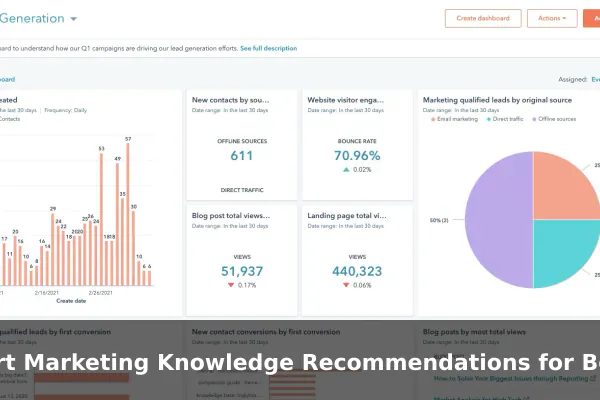
Smart marketing does not begin with more channels, more content, or more budget. It begins with better judgment. The businesses that improve results most consistently are usually not the ones collecting the most information. They are the ones turning scattered information into clear recommendations that tell teams what to do next, why it matters, and how success will be measured.
That is where smart marketing knowledge recommendations make a real difference. Marketing knowledge is not just a pile of reports, trend summaries, or customer notes. In practical business terms, it is the usable understanding a team builds about buyers, offers, timing, messaging, channels, costs, and performance. Recommendations sit on top of that knowledge layer. They translate raw insight into a decision that can change an outcome.
This article takes a distinct angle: not how to define marketing in general, and not how to build a full strategy from scratch, but how to create better recommendations from the knowledge your business already has. When teams learn how to gather the right signals, interpret them in context, and turn them into focused actions, they reduce wasted effort and improve the quality of every campaign decision.
What Smart Marketing Knowledge Really Means
Many teams confuse knowledge with information. Information is easy to collect. Knowledge is harder because it requires interpretation, comparison, and judgment. A dashboard may show that paid social traffic rose by 30 percent, but that figure alone does not tell you whether the traffic was qualified, profitable, or likely to convert later. Smart marketing knowledge connects numbers to meaning.
It is more than data collection
Smart marketing knowledge is built when a team can answer practical questions such as: Which audience segment responds fastest? Which message creates the best sales conversations? Which channel produces volume but weak fit? Which objections appear late in the buying process? These answers come from combining evidence across sources rather than reading one metric in isolation.
In other words, knowledge becomes smart when it is decision-ready. It helps marketers move from observation to action. It also reduces the risk of acting on noise, vanity metrics, or assumptions that sound persuasive but are not supported by evidence.
The four layers of usable marketing knowledge
A practical way to think about marketing knowledge is to divide it into four layers:
- Audience knowledge: who buyers are, what triggers demand, how needs differ by segment, and what friction stops action.
- Message knowledge: which promises, proof points, and offers create attention, trust, and response.
- Channel knowledge: where audiences engage, how each platform behaves, and what role each touchpoint plays in the journey.
- Performance knowledge: what the results mean over time, which changes produced lift, and where spend or effort is being wasted.
Recommendations become stronger when they pull from all four layers. That is what separates random marketing activity from informed marketing management.
Why Better Recommendations Lead to Better Outcomes
Most marketing waste does not come from a total lack of effort. It comes from weak direction. Teams launch campaigns with broad goals, generic creative, or unclear priorities because the recommendation behind the action was not specific enough. Better recommendations improve outcomes because they narrow the gap between what the business knows and what the team actually does.
Stronger recommendations sharpen execution
Consider the difference between two pieces of advice. The first says, increase email engagement. The second says, segment recent trial users by product interest, shorten the first nurture sequence to three emails, and lead with a case-based subject line because last quarter’s shorter sequences improved demo bookings among high-intent leads. The second recommendation is better because it is specific, evidence-based, and testable.
When recommendations are well formed, teams usually see four benefits:
- Sharper targeting: the right people receive more relevant messages.
- Clearer messaging: offers and proof points match real buyer concerns.
- Better resource allocation: time and budget move toward actions with a stronger case behind them.
- Faster learning cycles: tests are easier to design because the recommendation already contains a hypothesis.
Good recommendations reduce costly confusion
They also improve internal alignment. Sales, content, paid media, and leadership often interpret the same market signals differently. A structured recommendation forces clarity: what insight was found, what action is proposed, what outcome is expected, and what metric will confirm or reject the decision. That clarity is often the difference between repeating activity and improving performance.
Core Sources of Marketing Knowledge to Use
No team creates smart recommendations from instinct alone. High-quality recommendations are usually built from a mix of quantitative and qualitative signals. The goal is not to gather everything. The goal is to collect the sources most likely to explain buyer behavior and marketing performance.
Audience research and customer language
Useful knowledge starts with the market itself. Survey responses, interviews, chat transcripts, support tickets, reviews, and community conversations reveal how customers describe their goals and frustrations in their own words. This matters because recommendations improve when they are grounded in real demand language rather than internal jargon.
Look for repeated patterns such as:
- the outcome customers want most urgently
- the risk they fear before buying
- the alternatives they compare you against
- the phrases they use when describing value
These patterns lead to better recommendations about positioning, offer framing, and content priorities.
Campaign analytics and behavioral signals
Analytics help teams see not just what happened, but where behavior changed. Traffic quality, click depth, landing page completion, assisted conversions, repeat visits, funnel drop-off, and lead-to-sale progression all help explain which tactics deserve more investment. The key is to compare signals, not worship one number.
For example, high click-through rates may look promising until you notice weak on-page engagement or poor lead quality. A smart recommendation would not celebrate the click rate alone. It would ask whether the traffic matched the intended audience and whether the message created the right expectations before the click.
Competitor observation and category cues
Competitive observation is not about copying what others publish. It is about understanding how the market is framing problems, what promises are becoming common, and where customer expectations are rising. If every competitor focuses on speed but customers keep asking about implementation risk, that gap can shape a stronger recommendation than simple imitation ever could.
Watch for category-level signals such as:
- new proof formats that buyers seem to trust
- overused claims that no longer differentiate
- pricing or packaging changes that alter buyer expectations
- emerging objections in reviews or public discussions
Sales and service team feedback
Marketing teams often overlook one of the richest knowledge sources in the business: the people having direct conversations with prospects and customers. Sales representatives hear objections before purchase. Customer service teams hear frustration after purchase. Both provide context that analytics alone cannot supply.
A recommendation becomes more reliable when it combines what people say with what people do. If analytics show a drop in demo requests and the sales team reports that prospects now ask harder integration questions earlier, the recommendation may be to change the landing page proof structure rather than simply raise ad spend.
How to Turn Insights Into Actionable Recommendations

Many organizations have enough insight to improve performance, but they still fail to act because the bridge from insight to recommendation is weak. A useful recommendation needs structure. It should explain the signal, the meaning, the proposed action, the expected effect, and the measure of success.
Start with a recommendation brief
A short internal brief helps teams avoid vague advice. Each recommendation should answer five questions:
- What did we observe? State the pattern or problem clearly.
- Why does it matter? Connect the signal to a business outcome such as conversion, pipeline quality, retention, or efficiency.
- What do we recommend? Describe the exact change to message, audience, offer, channel, timing, or process.
- Why this option? Show the evidence supporting the choice.
- How will we know? Define the metric, baseline, and review window.
This simple format forces precision. It also makes recommendations easier to compare when several opportunities compete for limited time or budget.
Prioritize with impact, effort, and confidence
Not every insight deserves immediate action. Some patterns are interesting but low value. Others are high impact but too uncertain to justify a major rollout. A practical recommendation process scores each idea on three dimensions:
- Impact: How much could this change improve a meaningful business result?
- Effort: How much time, coordination, budget, or technical work is required?
- Confidence: How strong is the evidence behind the proposed action?
This step protects teams from chasing whatever sounds exciting in the meeting. It shifts decisions toward opportunities with a clear upside and a reasonable proof base.
Write recommendations so they can be tested
The best recommendation is not just a suggestion. It is a testable statement. For example: changing the landing page headline to address implementation speed will improve qualified demo requests from mid-market visitors because recent call notes show launch speed is now a top buying concern. This format includes a change, an audience, an expected outcome, and a reason.
That matters because measurable recommendations create a learning loop. Even when a recommendation does not work, the result is still useful. The team learns which assumption was wrong and updates its knowledge base instead of repeating the same guess later.
Common Recommendation Mistakes That Hurt Results
Smart marketing knowledge can still lead to poor outcomes if the final recommendation is weak. The most common problem is not bad data. It is weak translation from evidence to decision.
Vague advice that cannot guide action
Statements such as improve brand visibility, be more active on social media, or publish more educational content may sound reasonable, but they do not help a team act with confidence. Good recommendations identify a specific audience, a defined change, and a measurable outcome. If a recommendation cannot be assigned, scheduled, and evaluated, it is not ready.
Overreliance on assumptions or single metrics
One metric can easily mislead. Open rates can be distorted. Traffic spikes can be low quality. A sales drop may reflect seasonality rather than message failure. Recommendations should never rest on isolated numbers when broader context is available. This is especially important when leadership is eager to move fast and use the first explanation that sounds plausible.
Ignoring strategic fit
Some recommendations produce local improvement but hurt broader business goals. A short-term promotion may lift conversions while attracting poor-fit leads. A volume-based content strategy may increase traffic while weakening authority in a premium category. Recommendations should support the business model, not just the next report.
Watch for these warning signs before approving a recommendation:
- the evidence is thin or anecdotal
- the action is broad and loosely defined
- the expected outcome is not linked to a business metric
- the recommendation solves a symptom without explaining the cause
- no owner or review date has been assigned
These mistakes are common because they are easy to hide behind busy marketing activity. Clear recommendation discipline exposes them early.
A Simple Framework for Smarter Marketing Decisions
To make recommendation quality repeatable, teams need a consistent decision framework. One practical model is SCOPE: Signal, Context, Options, Priority, Evaluation. It is simple enough for weekly use and strong enough to improve how teams justify action.
Use the SCOPE method
- Signal: Identify the most important pattern, problem, or change in behavior.
- Context: Explain what is driving it and why it matters now.
- Options: List the realistic actions the team could take.
- Priority: Choose the best option based on impact, effort, and confidence.
- Evaluation: Define success measures, timing, and review ownership.
SCOPE is useful because it prevents teams from jumping straight from raw data to a favorite tactic. It adds the missing step most organizations skip: comparing options before choosing one.
An example in practice
Imagine a software company notices that webinar registrations remain strong but attendance quality is dropping. The signal is lower post-webinar meeting rates. The context is that new registrants are increasingly early-stage and are not ready for a sales call. The options might include changing webinar topics, tightening promotion targeting, or adding a qualification step. The priority decision could be to test narrower audience targeting first because it offers moderate effort and high confidence. Evaluation would track attendance-to-meeting conversion over the next two events.
That is the core benefit of smart marketing knowledge recommendations: they make decisions explainable before money is spent and measurable after the change goes live.
Metrics That Show Whether Recommendations Are Working
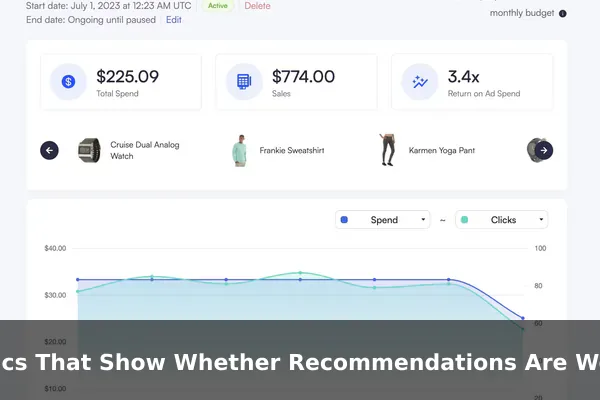
Recommendations are only as good as the outcomes they produce. That means teams need to track metrics that reflect quality, not just activity. The exact mix will vary by business model, but strong evaluation usually includes both leading indicators and lagging indicators.
Leading indicators of recommendation quality
Leading indicators show whether the change is moving the audience in the right direction before revenue data fully matures. Useful examples include:
- engagement quality: scroll depth, time on key pages, repeat visits, reply rate, or content completion
- lead quality: fit scores, sales acceptance rate, meeting show rate, or qualification rate
- message response: click-to-conversion rate, offer uptake, demo request rate, or landing page completion
- test performance: lift versus baseline, cost per desired action, or speed to learning
These metrics help teams see whether the recommendation is improving the right part of the journey rather than just increasing surface-level attention.
Lagging indicators tied to business outcomes
Lagging indicators confirm whether the recommendation created meaningful commercial value. Depending on the business, that may include pipeline contribution, closed revenue, retention, renewal rate, customer expansion, profitability, or marketing efficiency. The point is not to track everything. It is to select the indicators that reflect the real purpose of the recommendation.
For example, if the recommendation aimed to improve audience fit, the most important metric may not be clicks or leads. It may be the rate at which those leads become qualified opportunities. If the recommendation aimed to improve customer education, the better outcome measure may be activation or retention rather than top-of-funnel volume.
Use review windows that match the decision
One reason teams misjudge recommendations is timing. Some decisions show impact within days. Others need a full sales cycle. Match the review window to the expected effect. Creative adjustments on paid traffic may show directional results quickly. Positioning changes for a high-consideration offer may require several weeks or months. Clear timing protects good recommendations from being abandoned too early and bad ones from running too long.
How Teams Can Build a Knowledge-Driven Marketing Culture
Even the best recommendation method will not help much if knowledge stays trapped in isolated tools or individual heads. A knowledge-driven culture makes smart recommendations normal, not exceptional. It treats insight as a shared asset and recommendation quality as a team capability.
Create a shared knowledge system
Teams do not need a complex platform to start. They need a disciplined place to record patterns, tests, results, objections, segment insights, and recommendation decisions. A living document, shared workspace, or structured repository can work well if it is updated consistently.
The key is to capture not just outcomes, but also reasoning. When a test succeeds or fails, record why the team believed the recommendation was worth trying. Over time, this reduces repeated mistakes and helps new team members learn faster.
Review recommendations across functions
Marketing knowledge gets sharper when more than one function reviews it. Paid media teams see channel behavior. Content teams see message response. Sales sees objections. Service teams see unmet expectations. Bringing these views together improves both diagnosis and action.
A simple monthly review can cover:
- what patterns appeared across campaigns
- which recommendations were tested
- what outcomes were confirmed or disproved
- which insights should change future priorities
Reward learning, not just immediate wins
If teams only celebrate campaigns that beat target, people will hide uncertainty and avoid ambitious tests. A better culture rewards disciplined learning. A recommendation that fails but produces a clear lesson can still improve future outcomes. That mindset encourages marketers to build stronger hypotheses, cleaner measurement, and better documentation.
Over time, this culture creates an advantage competitors cannot easily copy. It is not just a better campaign here or there. It is a better decision system across the whole marketing function.
Conclusion: Make Marketing Knowledge Useful
Smart Marketing Knowledge Recommendations for Better Outcomes is not just a useful title. It describes a practical operating principle. Marketing knowledge has value only when it helps a team choose better actions. Strong recommendations connect customer understanding, channel learning, performance data, and business priorities in a way that people can actually use.
When recommendations are specific, evidence-based, prioritized, and measurable, marketing becomes less reactive and more effective. Teams waste less budget, learn faster, and improve the quality of decisions across campaigns, content, offers, and customer experience. That is how better knowledge turns into better outcomes: not through more information alone, but through smarter recommendations that make action clearer.
