
A sales funnel is one of the most useful ways to understand how people move from first hearing about a business to finally making a purchase. Instead of assuming every visitor is ready to buy right away, the funnel shows that most customers move through a series of decisions. Some are only becoming aware of a problem, some are comparing options, and only a smaller group is ready to take action now.
That is why businesses use sales funnels to organize marketing, sales communication, lead nurturing, and conversion efforts. A good funnel helps teams match the right message to the right stage, reduce friction, and improve results without guessing. It also gives structure to what can otherwise feel like a messy buying process.
In simple terms, a sales funnel is a practical model for turning attention into action. In this guide, you will learn the sales funnel meaning, the main stages prospects move through, what customers need at each step, and real sales funnel examples that make the concept easier to apply in the real world.
Sales Funnel Meaning in Simple Terms
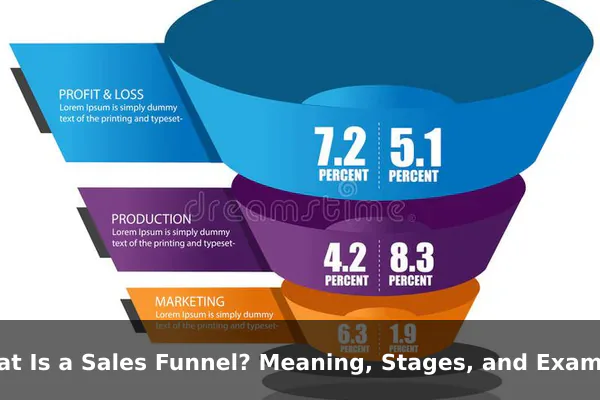
A sales funnel is a visual model that shows how potential customers move from initial awareness to purchase. It is called a funnel because many people enter at the top, but fewer continue to each next stage. A large audience may see an ad, visit a website, or hear about a brand, but only part of that audience becomes interested, fewer evaluate the offer seriously, and an even smaller group buys.
The sales funnel meaning is not just about tracking numbers. It is about understanding buyer readiness. Different people need different information before they feel comfortable making a decision. A person who has never heard of your company needs education and context. A person comparing vendors needs proof, clarity, and trust. A person at checkout needs a smooth path and a final reason to act.
Why the Funnel Metaphor Works
The funnel metaphor works because it reflects what businesses see in real life:
- Not every prospect becomes a customer.
- People drop off when the message is weak or the offer is not relevant.
- Conversions improve when each stage is supported with the right content and follow-up.
- Revenue becomes easier to forecast when you understand how people move through the funnel.
In other words, the funnel helps simplify a complicated buying process into stages that can be measured and improved.
Sales Funnel vs Customer Journey
The sales funnel and the customer journey are related, but they are not identical. A sales funnel focuses on conversion stages from awareness to purchase. A customer journey is broader. It includes the buyer’s perspective, feelings, questions, and touchpoints before, during, and after the sale.
It also helps to separate the funnel from a sales pipeline. A pipeline is often used internally by sales teams to track deals, contacts, and actions. A funnel is a higher-level model of how a group of prospects narrows toward conversion. That distinction matters because many teams confuse operational deal tracking with buyer-stage communication.
Why Sales Funnels Matter in Marketing and Sales
A sales funnel matters because it connects marketing activity to business outcomes. Without a funnel, teams often create content, run ads, or send emails without knowing where prospects are getting stuck. With a funnel, they can see where attention is coming from, where leads lose interest, and what changes may improve conversion.
Funnels Improve Message Fit
One of the biggest benefits of a sales funnel is better message fit. A prospect at the awareness stage does not need a hard close. That person usually needs a useful explanation, a compelling problem statement, or a clear introduction to the category. By contrast, a bottom-of-funnel lead may need pricing, implementation details, product comparisons, or reassurance about risk.
When businesses send the same message to everyone, they waste attention. Funnel thinking fixes that by matching communication to readiness.
Funnels Help Teams Prioritize Better
Funnels also help businesses prioritize their time and budget. If the top of the funnel is weak, the business may need more qualified traffic. If many leads enter but very few move to consideration, the problem may be unclear positioning or poor lead nurturing. If people reach the checkout page but do not buy, the problem may be friction, trust, or pricing confusion.
This is valuable because it shifts decisions from opinion to diagnosis. Instead of saying, “marketing is not working,” teams can identify which stage needs attention.
Funnels Support Revenue Planning
Sales funnels make revenue planning more realistic. When a business knows how many visitors become leads, how many leads request a demo, and how many demos close, it can estimate what level of activity is required to reach a revenue goal. This does not eliminate uncertainty, but it creates a more defensible planning process.
That is especially useful for:
- Small businesses trying to predict monthly sales.
- SaaS teams managing free trials and demos.
- Service providers tracking inquiries and booked calls.
- E-commerce stores trying to improve product page and checkout conversion.
The Main Stages of a Sales Funnel
Most sales funnels use slightly different labels depending on the business model, but the core idea is similar. A practical version includes six stages: awareness, interest, consideration, intent, decision, and purchase.
1. Awareness
This is the top of the funnel. The prospect becomes aware of a problem, a need, or a brand. They might discover the business through search, social media, referrals, ads, blog content, podcasts, webinars, or word of mouth.
At this stage, the goal is not to force a sale. The goal is to earn attention and make the prospect want to learn more. Educational content works well here because awareness-stage buyers are often trying to understand a problem before they evaluate solutions.
2. Interest
Once someone is aware of the brand or offer, the next stage is interest. The person starts paying closer attention. They may read more pages, subscribe to an email list, follow the brand, download a guide, or browse several product categories.
Interest means the prospect sees possible relevance. They are not yet committed, but they are giving you time, which is valuable. The business should use that moment to communicate clearly what it does, who it helps, and why it is different.
3. Consideration
In the consideration stage, the prospect is evaluating options. They may compare vendors, features, packages, pricing models, or expected outcomes. This is where credibility becomes essential. The customer wants to know whether your offer is trustworthy and suitable for their situation.
Good consideration-stage assets often include:
- Case studies
- Product comparisons
- Testimonials
- Detailed service pages
- FAQ sections
- Demo videos
The more expensive or complex the purchase, the more important this stage becomes.
4. Intent
Intent is the point where the prospect shows signs of being close to action. They may book a call, request a proposal, start a free trial, add products to a cart, ask detailed questions, or revisit pricing pages.
This stage is highly valuable because it reveals buying signals. Businesses that respond quickly and clearly here often outperform those that wait too long or rely on generic follow-up.
5. Decision
At the decision stage, the buyer is choosing whether to move forward and with whom. They may be comparing final details like price, onboarding speed, guarantees, contract terms, return policies, or proof of results.
Small barriers matter here. A confusing proposal, unclear next step, missing social proof, or slow response can stop the deal. A clean decision-stage experience removes doubt and gives the buyer confidence.
6. Purchase
The purchase stage is where the transaction happens. The person buys the product, signs the agreement, books the service, or becomes a customer.
Although the classic funnel often ends here, smart businesses know the process should not stop at payment. A smooth onboarding experience, confirmation message, follow-up support, and a clear next step can improve satisfaction, retention, repeat purchase, and referrals. In practice, strong post-purchase experiences often feed the top of the next funnel through reviews and recommendations.
What Customers Need at Each Funnel Stage
A useful sales funnel does not just label stages. It answers a more practical question: what does the customer need in order to move forward? This is where many businesses improve results. Instead of pushing harder, they reduce uncertainty and make the next step easier.
Top-of-Funnel Needs
At the awareness and interest stages, customers usually need clarity, relevance, and education. They are asking questions like:
- What is this problem?
- Why does it matter?
- Who can help with it?
- Is this solution relevant to me?
Useful touchpoints at this stage include blog posts, short videos, search-friendly landing pages, beginner guides, social content, and simple lead magnets. The job is to start a relationship, not overload the visitor with sales pressure.
Middle-of-Funnel Needs
At the consideration stage, customers need proof and context. They want enough information to compare alternatives and evaluate fit. This is where businesses should answer questions such as:
- How does the product or service work?
- What makes it different from alternatives?
- What results can I reasonably expect?
- What kind of customer is it best for?
Middle-of-funnel content often includes webinars, comparison pages, product tours, email nurturing sequences, testimonials, and practical examples. If the offer is complicated, a live conversation or tailored walkthrough may also help.
Bottom-of-Funnel Needs
At the intent and decision stages, customers need confidence and low friction. They are close to buying, but they still want reassurance. Helpful assets here include:
- Pricing pages with transparent details
- Strong testimonials and case studies
- Risk reducers such as guarantees or free trials
- Fast answers to objections
- Simple checkout, proposal, or booking flow
The most common mistake at the bottom of the funnel is assuming the prospect needs more persuasion when what they really need is a smoother path.
A Simple Way to Map Funnel Support
- Awareness: attract attention with useful, problem-aware content.
- Interest: explain the offer and encourage a low-commitment next step.
- Consideration: build trust with details, proof, and comparisons.
- Intent: respond quickly to buying signals and remove hesitation.
- Decision: make the choice easy and credible.
- Purchase: make the transaction and onboarding smooth.
Sales Funnel Examples Across Different Businesses
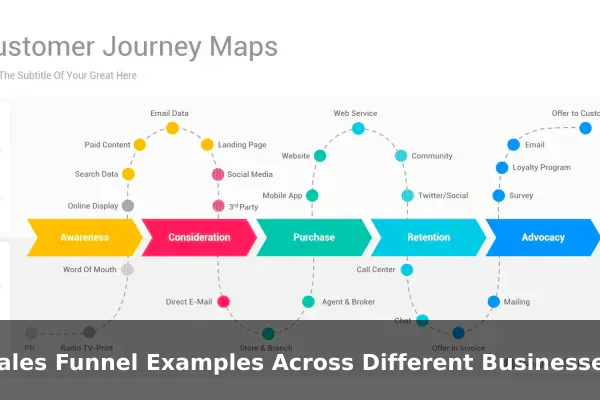
Sales funnel examples are helpful because the structure changes depending on what a business sells, how expensive the offer is, and how long the buying cycle takes.
E-commerce Sales Funnel Example
Imagine an online store selling premium running shoes. A potential customer sees a social media video about foot support for long-distance runners. That is awareness. They click through to a blog article or category page and browse several shoe models. That is interest.
Next, they read product descriptions, compare cushioning levels, view customer reviews, and check shipping and return policies. That is consideration. When they add a pair to the cart, sign up for a discount, or revisit the product later, that signals intent. At decision, they compare final price, delivery speed, and sizing confidence. Purchase happens when they complete checkout.
In this funnel, useful conversion tools may include retargeting ads, abandoned cart emails, user reviews, size guides, and checkout simplification.
SaaS Sales Funnel Example
Now consider a SaaS company selling project management software. A team lead finds an article about missed deadlines and collaboration bottlenecks. That is awareness. They subscribe to a newsletter or download a workflow template, showing interest.
In consideration, they compare software tools, read integration details, evaluate team permissions, and watch a demo. Intent appears when they start a free trial, invite teammates, or request a live walkthrough. The decision stage includes comparing plans, support quality, implementation effort, and expected ROI. Purchase happens when the company upgrades to a paid plan.
This funnel often depends on educational content at the top and product-led proof in the middle and bottom. Trial activation, onboarding emails, and in-app prompts become key parts of the conversion path.
Service Business Sales Funnel Example
For a service business such as a local accounting firm or marketing consultant, the funnel may be more personal. A prospect hears about the business from a referral or finds it through search. Awareness starts there. Interest grows when the person reads the service page, checks credentials, and reviews the firm’s specialty.
During consideration, the prospect looks at testimonials, case studies, service packages, or pricing guidance. Intent appears when they submit a contact form or book a discovery call. At decision, they want clarity about process, timelines, communication, and fees. The purchase happens when they sign an agreement or approve the proposal.
This type of funnel usually relies heavily on trust. Strong messaging, visible expertise, and fast follow-up matter more than flashy promotion.
Common Sales Funnel Mistakes to Avoid
Many funnels underperform not because the idea is wrong, but because execution is incomplete. The most common sales funnel mistakes are usually practical and fixable.
Attracting the Wrong Audience
If the top of the funnel brings in people who do not actually need the offer, conversion rates will stay weak no matter how persuasive the copy is. Traffic alone is not a success metric. Relevance matters more.
Asking for Too Much Too Early
Some businesses push for a sale when the prospect is still learning. That can reduce trust and increase drop-off. A colder lead may be more willing to subscribe, download a guide, or watch a short demo than buy immediately. The next step should match the buyer’s level of intent.
Weak Follow-Up
A surprising amount of funnel leakage comes from poor follow-up. Leads inquire and hear nothing for days. Free trial users never receive onboarding help. People abandon carts and are never reminded. Funnel design is not only about the first click; it is also about what happens afterward.
Too Much Friction
Long forms, confusing navigation, hidden pricing, clunky checkout flows, and unclear calls to action all create friction. If customers must work too hard to understand what to do next, many will leave even if they were interested.
No Measurement
Another major mistake is running a funnel without tracking performance. Businesses often know how many sales they want, but not where leads are coming from or where prospects drop off. If you do not measure stage-by-stage behavior, optimization becomes guesswork.
How to Build a Simple Sales Funnel
You do not need complex software or dozens of automations to build a useful funnel. A simple sales funnel can be highly effective if it is clear, relevant, and measurable.
Step 1: Define the Audience and Problem
Start with who you want to reach and what problem they want solved. A funnel only works when the message fits a specific audience. Be clear about pain points, goals, objections, and decision factors.
Step 2: Create an Entry Point
Choose how people will discover you. This could be search content, paid ads, referrals, social posts, webinars, or partnerships. The top of the funnel should bring the right kind of attention, not just any attention.
Step 3: Offer a Logical Next Step
After the first interaction, give prospects a low-friction next action. Depending on the business, that could be:
- Download a checklist
- Join an email list
- View a product category
- Watch a demo
- Book a consultation
- Start a free trial
The next step should feel like natural progress, not a sudden leap.
Step 4: Nurture Interest and Build Trust
Once the lead enters the funnel, use email, remarketing, content, demos, or consultative sales conversations to move them toward consideration and intent. Trust is built by being helpful, specific, and credible.
Step 5: Make Conversion Easy
When the prospect is ready, reduce friction. Keep forms short, clarify pricing, answer objections, and make the call to action obvious. The easier it is to complete the action, the better the funnel will perform.
Step 6: Review and Improve
No funnel is perfect on the first try. Review each stage regularly. If traffic is strong but leads are weak, refine targeting or messaging. If leads are interested but not converting, test the offer, the proof, or the buying process. Incremental improvements at one stage can create meaningful gains across the whole funnel.
How to Measure Sales Funnel Performance
Measurement turns the sales funnel from a concept into a management tool. You do not need to track every possible number, but you do need a few clear indicators that show whether people are moving forward.
Key Sales Funnel Metrics
- Traffic: how many people enter the top of the funnel.
- Lead conversion rate: the percentage of visitors who become leads.
- Click-through rate: how often people move from one touchpoint to the next.
- Cost per lead: how much it costs to generate a lead.
- Demo or trial rate: how many leads show stronger buying intent.
- Sales conversion rate: the percentage of qualified prospects who buy.
- Drop-off rate: where people leave the funnel without advancing.
These metrics help answer practical questions. Are you attracting enough relevant visitors? Are your landing pages persuasive? Are leads getting stuck before the offer is clear? Are decision-stage prospects dropping off because of friction or trust issues?
Where to Look First
If the funnel is underperforming, start by finding the biggest drop-off point. A large problem in one stage usually matters more than small changes everywhere. For example:
- High traffic but few leads may suggest weak targeting or a poor landing page.
- Many leads but few demos may suggest low interest or weak nurturing.
- Many demos but few closed deals may suggest offer issues, pricing friction, or poor qualification.
This stage-by-stage approach is what makes funnel analysis so valuable. It gives businesses a clearer path to improvement.
Sales Funnel vs Marketing Funnel
The terms sales funnel and marketing funnel are often used interchangeably, and in many businesses the difference is small. Both describe how people move from awareness to conversion. However, some teams separate them by responsibility and timing.
A marketing funnel often focuses more on attracting attention, generating leads, and educating the audience. A sales funnel may start later, once a lead is qualified and moving toward a purchase decision. In that interpretation, marketing fills the funnel and sales helps convert the best opportunities.
In practice, the important point is not the label. The important point is coordination. If marketing attracts the wrong people or sales receives leads without context, the whole system becomes inefficient. A strong funnel usually works best when marketing and sales share definitions, stages, and success metrics.
Key Takeaways for Using a Sales Funnel Effectively
A sales funnel is not just a diagram for presentations. It is a practical framework for understanding buyer behavior and improving conversion. It helps businesses see that customers rarely buy in a single step. They move through awareness, interest, consideration, intent, decision, and purchase, and each stage requires a different kind of support.
The most effective funnels stay simple, customer-focused, and measurable. They attract the right audience, provide helpful information at the right time, reduce friction near the point of action, and track where prospects drop off. Businesses that take this approach usually make better use of content, advertising, follow-up, and sales effort.
If you want to use a sales funnel well, focus on a few fundamentals:
- Know who the funnel is for.
- Match each message to buyer readiness.
- Use proof and clarity to build trust.
- Make the next step obvious and easy.
- Measure each stage and improve the weakest link first.
That is the real meaning of a sales funnel. It is not about pushing people through a rigid system. It is about guiding the right prospects toward a confident decision with fewer obstacles and more relevance at every step.
