
When most people think about public relations, they picture a press release sent to a handful of journalists or a spokesperson managing a corporate scandal on the evening news. That image is not wrong, but it is far from complete. Public relations — or PR — is one of the oldest and most powerful tools available to any organization, yet it remains one of the most misunderstood disciplines in business communications.
In today’s crowded digital landscape, consumers are bombarded with thousands of paid advertisements every day. Banner blindness, ad-blocking software, and growing skepticism toward branded content have made it harder than ever for companies to earn genuine attention. This is exactly where public relations steps in. PR operates in the realm of earned media — coverage, credibility, and conversation that you cannot simply buy. When a respected journalist writes about your brand, when a podcast host recommends your service, or when a community rallies around your story, the impact on trust and brand equity far outweighs what most ad budgets can achieve.
For marketers, understanding public relations is not optional. PR and marketing are not competing disciplines — they are complementary forces. When integrated effectively, PR amplifies the reach of your campaigns, deepens audience trust, and gives your marketing messages a credibility boost that paid channels alone cannot deliver. This guide breaks down what PR truly means, how it works, and how you can use it to build stronger marketing strategies.
What Public Relations Actually Means
The Public Relations Society of America defines public relations as a strategic communication process that builds mutually beneficial relationships between organizations and their publics. That definition might sound corporate, but its practical meaning is straightforward: PR is about shaping how people perceive your brand, and doing so through channels that earn trust rather than pay for it.
The word publics is key here. Unlike a general audience, PR distinguishes between multiple distinct groups that an organization must communicate with:
- Customers and prospects — the people who buy or might buy your products
- Media outlets and journalists — gatekeepers who amplify your story to larger audiences
- Investors and stakeholders — those with financial or governance interest in your organization
- Employees and internal teams — your organization’s most credible brand ambassadors
- Community and government bodies — groups that can influence your operating environment
Each of these publics requires a different communication approach, tone, and channel. A PR strategy that works for journalists may not resonate with investors. A message crafted for loyal customers may land very differently among regulators. Skilled PR professionals navigate these nuances constantly.
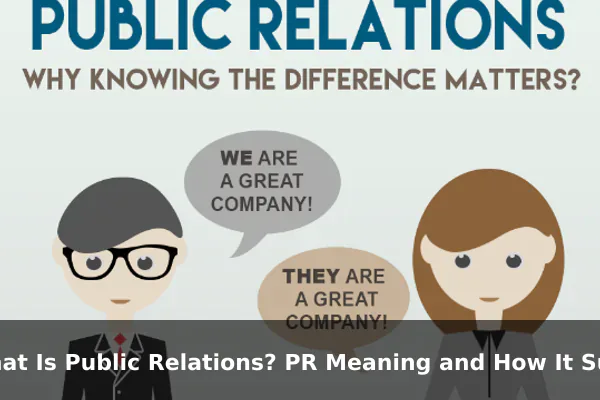
At its most fundamental level, PR is distinct from advertising because it does not involve paying for placement. When a brand runs a TV commercial or a sponsored Instagram post, everyone understands it is paid content. When a journalist independently covers your new product launch and publishes a story about it, readers perceive that as an unbiased, credible endorsement. That distinction — paid versus earned — is at the heart of what makes PR a uniquely powerful tool.
Core Functions of a PR Strategy
Public relations is not a single activity. It is a collection of disciplines, each serving a specific purpose in how an organization communicates with the world. Understanding these core functions helps marketers know exactly where PR fits into their broader strategy.
Media Relations
Media relations is what most people associate with PR. It involves building and maintaining relationships with journalists, editors, and producers so that your organization becomes a trusted source for stories, commentary, and expert perspectives. A strong media relations strategy means your brand is more likely to be included in industry roundups, featured in relevant news stories, and called upon when reporters need a quote on a breaking topic.
Press Releases and News Announcements
A press release is a written statement distributed to media outlets to announce something newsworthy — a product launch, a company milestone, an executive hire, or a partnership. While press releases have evolved significantly in the digital age, they remain a core PR tool for formally announcing news and creating a written record that journalists, search engines, and audiences can reference.
Crisis Communication
Every organization will eventually face a reputational challenge — a product recall, a data breach, a public controversy, or a leadership scandal. Crisis communication is the PR function that manages how the organization responds publicly. A well-executed crisis communication plan can protect brand equity and rebuild trust; a poorly handled crisis can destroy years of goodwill in days.
Community Relations and Thought Leadership
Community relations focuses on building a positive presence within the local or industry communities where the organization operates. Thought leadership takes this further by positioning executives and brand voices as genuine industry experts — through speaking engagements, contributed articles, and consistent media presence. Both functions are long-term investments in credibility that pay dividends during product launches and difficult periods alike.
How PR Differs from Marketing and Advertising
The distinction between PR, marketing, and advertising is one of the most debated topics in business communications. All three are about reaching audiences and influencing behavior, but they differ in channel, control, and cost in ways that matter strategically.
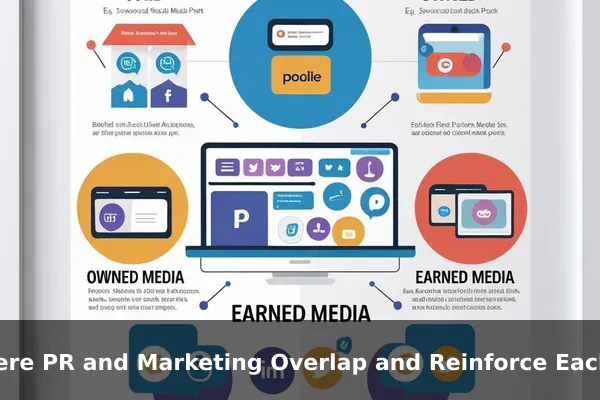
A widely used framework separates media into three types:
- Paid media — content you pay to place, such as display ads, sponsored posts, PPC campaigns, and TV commercials. You control the message completely, but audiences know it is advertising.
- Owned media — platforms and content you control, such as your website, blog, email newsletter, and social media accounts. You control the message, but the audience you reach is typically limited to those who already follow you.
- Earned media — coverage and mentions you receive because others find your story worth sharing. This includes news articles, reviews, podcast features, and organic social shares. You do not control it, but it carries far more credibility than paid content.
PR lives primarily in earned media. Marketing and advertising live in paid and owned media. This is the foundational distinction that shapes everything about how PR operates and why it delivers a different kind of value.
Advertising says: Buy our product — and we paid to tell you that. PR says: Here is a story about our product — and someone else found it worth telling. The credibility gap between those two statements is enormous. Multiple consumer research studies have consistently found that people trust editorial coverage and peer recommendations significantly more than branded advertising. That earned trust is PR’s core value proposition.
Where PR and Marketing Overlap and Reinforce Each Other
Despite their differences, PR and marketing are most effective when they work together. The modern marketing funnel needs both paid reach and earned credibility to move audiences from awareness to action. Here are the most important integration points where the two disciplines amplify each other.
Product Launches
A product launch is the clearest example of PR and marketing working in tandem. Marketing handles the paid promotion — paid social, search ads, email campaigns. PR handles the earned coverage — pitching journalists for reviews, securing podcast appearances, and generating buzz through media relationships. Together, they create a multi-channel wave of awareness that neither could achieve alone.
Content Amplification
Your marketing team may produce outstanding long-form content — an original research report, a detailed industry guide, or a data-driven infographic. Without PR, that content relies on organic search and paid promotion to find its audience. With PR, that same content becomes a media pitch: journalists covering your industry can be offered the data as an exclusive resource, exponentially increasing reach without additional ad spend.
Brand Storytelling and Influencer Relations
Marketing teams craft brand narratives, but PR brings them to life in the places audiences trust most. When your origin story, your mission, or your customer success stories appear in respected publications, they carry a weight that branded content cannot replicate. PR also extends into influencer and analyst relations — connecting your brand with respected voices who can independently validate your positioning to highly targeted audiences.
Types of PR Tactics Marketers Use Today
The PR toolkit has expanded significantly in the digital era. Marketers today can deploy a range of PR tactics — many of which require more creativity and persistence than budget.
- Media pitching — reaching out directly to journalists with a story idea their audience would find valuable. A strong pitch is concise, timely, and tailored to the specific writer and publication, not a generic broadcast.
- HARO and source platforms — platforms like Connectively (formerly HARO), Qwoted, and SourceBottle allow journalists to request expert sources. Responding to relevant queries can earn brand mentions in high-authority publications at minimal cost.
- Podcast appearances — podcast audiences are deeply engaged and loyal. Securing guest spots on industry-relevant podcasts builds awareness, establishes thought leadership, and generates SEO-valuable backlinks when episodes are published online.
- Event sponsorships and speaking engagements — sponsoring or speaking at industry events creates visibility among highly targeted, in-person audiences and generates repurposable content for owned media channels.
- Social media PR and community engagement — monitoring brand conversations, responding meaningfully to community discussions, and proactively sharing newsworthy updates positions your brand as an active, trustworthy presence beyond your own feed.
- Crisis statements and reputation management — having a prepared response framework and monitoring brand mentions in real time allows you to act quickly when reputational challenges emerge, rather than reacting after damage spreads.
How to Measure PR Effectiveness
One of the longstanding criticisms of PR is that it is difficult to measure. Unlike a paid ad campaign where you can track clicks, conversions, and cost per acquisition in real time, PR’s impact is often indirect and cumulative. However, modern tools have made PR measurement far more precise and meaningful for marketing teams.
Key PR Metrics Worth Tracking
- Media mentions — the volume and quality of coverage your brand receives across print, digital, and broadcast outlets. Tools like Mention, Cision, and Google Alerts can track these automatically.
- Share of voice — how much of the media conversation in your industry your brand owns compared to competitors. A growing share of voice signals strengthening PR effectiveness over time.
- Referral traffic — when media coverage includes a link to your website, you can track the resulting visits in analytics tools. High-authority publication links also contribute significantly to your SEO domain strength.
- Brand search volume — a spike in branded searches following a PR campaign indicates increased public awareness driven by earned media, a reliable signal that your story reached new audiences.
- Sentiment analysis — beyond volume, the tone of media coverage matters. Positive sentiment trends indicate effective PR; spikes in negative sentiment may signal an issue requiring immediate attention.
The key is aligning PR metrics with your marketing team’s existing KPIs. If your marketing goal is top-of-funnel awareness, media mentions and share of voice are your primary indicators. If the goal is driving website traffic or conversions, referral traffic and brand search volume become more directly relevant.
Building a Simple PR Plan Alongside Your Marketing Strategy
You do not need a dedicated PR agency to start using public relations strategically. With the right framework, marketing teams of any size can integrate PR activities into their existing workflows and campaign calendars.
Step 1: Define Your Target Media
Start by identifying the publications, podcasts, blogs, and journalists that genuinely reach your target audience. Be specific — a broad list of every outlet in your industry is less useful than a focused list of 20 to 30 sources where your ideal customers actually spend time reading and listening.
Step 2: Craft Your Key Messages
Every PR effort should be anchored in a small set of core messages — the three to five things you most want your audience to know and believe about your brand. These messages should align with your marketing positioning and remain consistent across all PR activities and media touchpoints.
Step 3: Build a Press List and Align Your Calendar
Compile a structured contact database of journalists, editors, and podcast hosts, including their beat focus and recent coverage. Personalization is critical — generic mass pitches are almost always ignored. Then map your PR activities to your marketing calendar. If a product launch is planned, begin PR outreach six to eight weeks in advance. PR requires lead time because journalists plan editorial content weeks or months ahead of publication.
Step 4: Track, Measure, and Refine
Set up monitoring tools before your PR campaigns begin. Review results against your defined metrics each quarter and use those insights to refine your pitching angles, press list, and core messaging. PR effectiveness compounds over time as relationships deepen and your brand becomes a recognized, reliable source.
Conclusion
Public relations is not a luxury reserved for large corporations with dedicated communications teams. It is a strategic discipline that any marketer can leverage to build credibility, extend reach, and deepen audience trust in ways that paid media alone cannot achieve. Understanding what PR is, how it differs from advertising and marketing, and where it integrates most powerfully with your campaigns is a foundational skill for the modern marketer.
In a world where consumers increasingly tune out ads and trust peer voices and independent editorial sources, earned media has never been more valuable. Whether you are pitching a journalist, responding to a source query, preparing a crisis communication plan, or aligning press outreach with a product launch, you are doing PR — and when done well, it makes every other marketing investment more effective and more credible.
